

OSB
OSB Manufacturer & Supplier in China
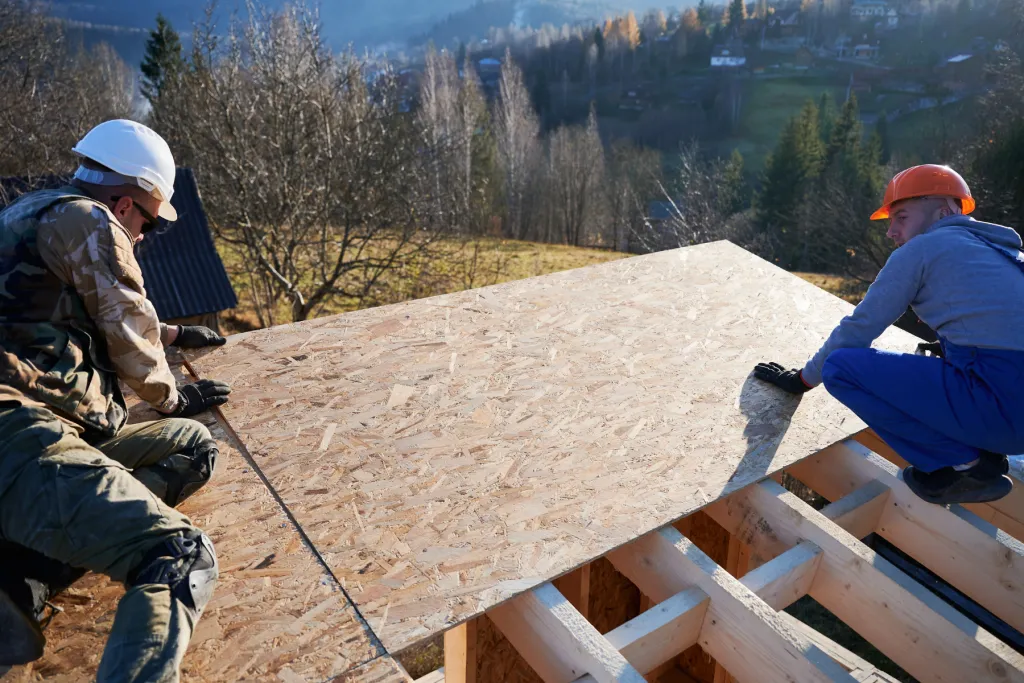
Galaxi supplies OSB panels for construction, furniture, packaging and industrial applications, with OSB/2, OSB/3 and OSB/4 options available according to structural, moisture and load requirements.
OSB/2 ·
OSB/3 ·
OSB/4 ·
Structural Panels ·
Moisture Resistant Options
TECHNICAL OVERVIEW
OSB Specifications
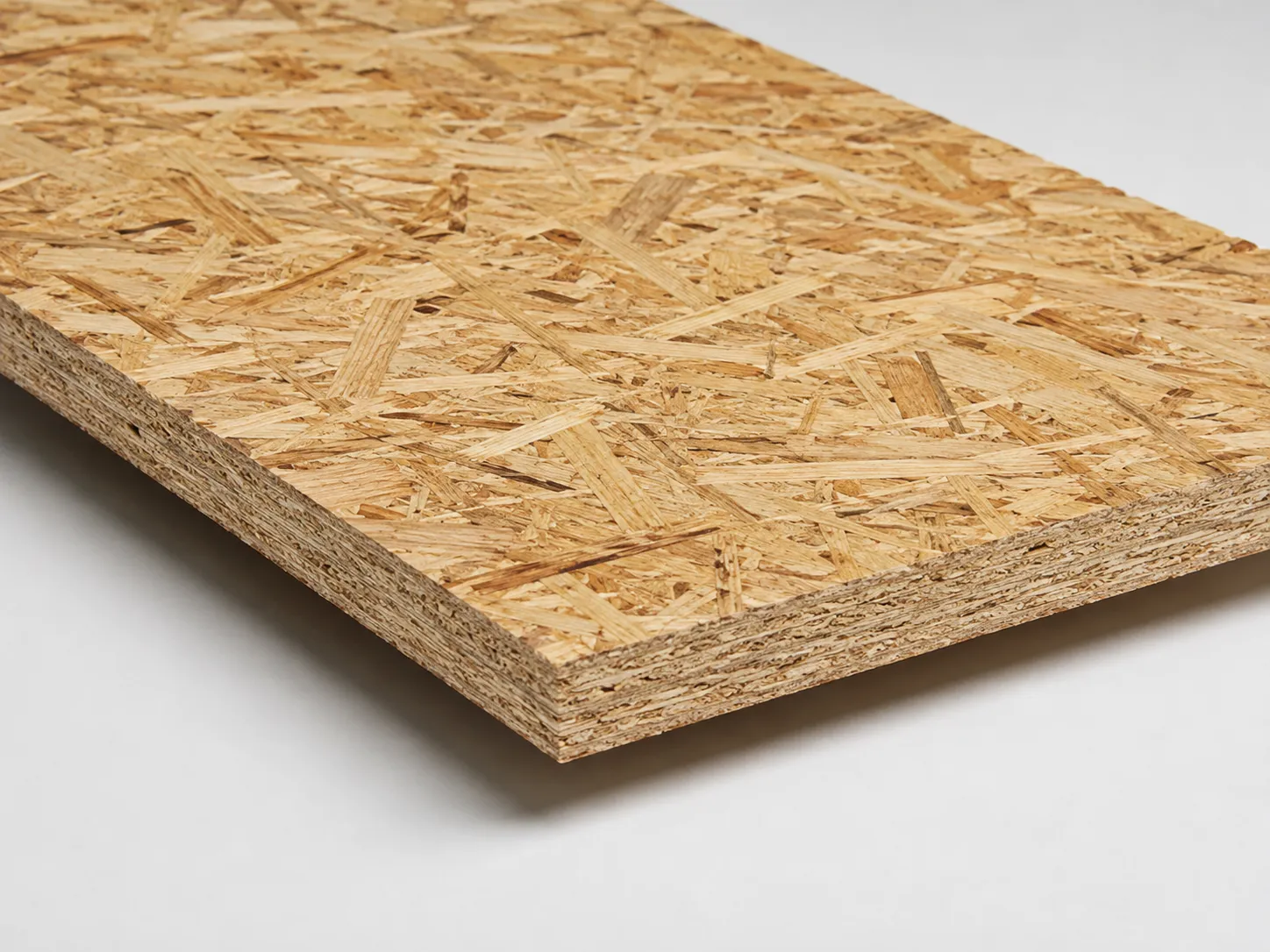
OSB panels are available in different grades, thicknesses and edge profiles for structural construction, flooring, roofing, packaging and industrial applications.
Panel Size
1220 × 2440 mm / 1250 × 2500 mm / customized sizes
Thickness
6–25 mm
Grade
OSB/2 / OSB/3 / OSB/4 — EN 300
Density
Approx. 600–720 kg/m³
Glue
MDI / PMDI
Surface
Unsanded / Sanded
Edge
Square Edge / Tongue & Groove
Moisture Content
Approx. 2–12%
Applications
Roofing / Wall Sheathing / Flooring / Timber Frame / Packaging / Industrial Use
PANEL STRUCTURE
Oriented Strand Structure & Strength Direction
Oriented Surface Strands
Long wood strands in the outer layers are mainly aligned with the panel’s major axis, helping provide higher bending strength and stiffness in the length direction.
Cross-Oriented Core Layers
Core strands are arranged across the main direction to improve dimensional stability and support balanced structural performance through the panel.
Major & Minor Axis
OSB has directional mechanical properties. The major axis normally provides higher bending performance, while the minor axis contributes cross-panel stability.
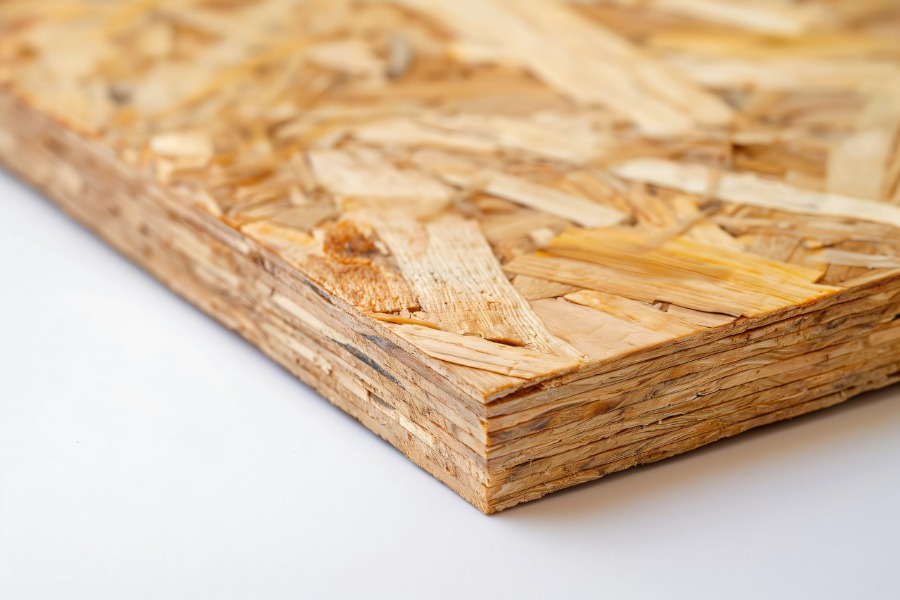
Typical OSB layered strand structure with directional surface and cross-oriented core layers.
APPLICATION GUIDE
Choose OSB by Application
OSB grade and thickness should be selected according to structural load, support spacing, service conditions and the final construction application.
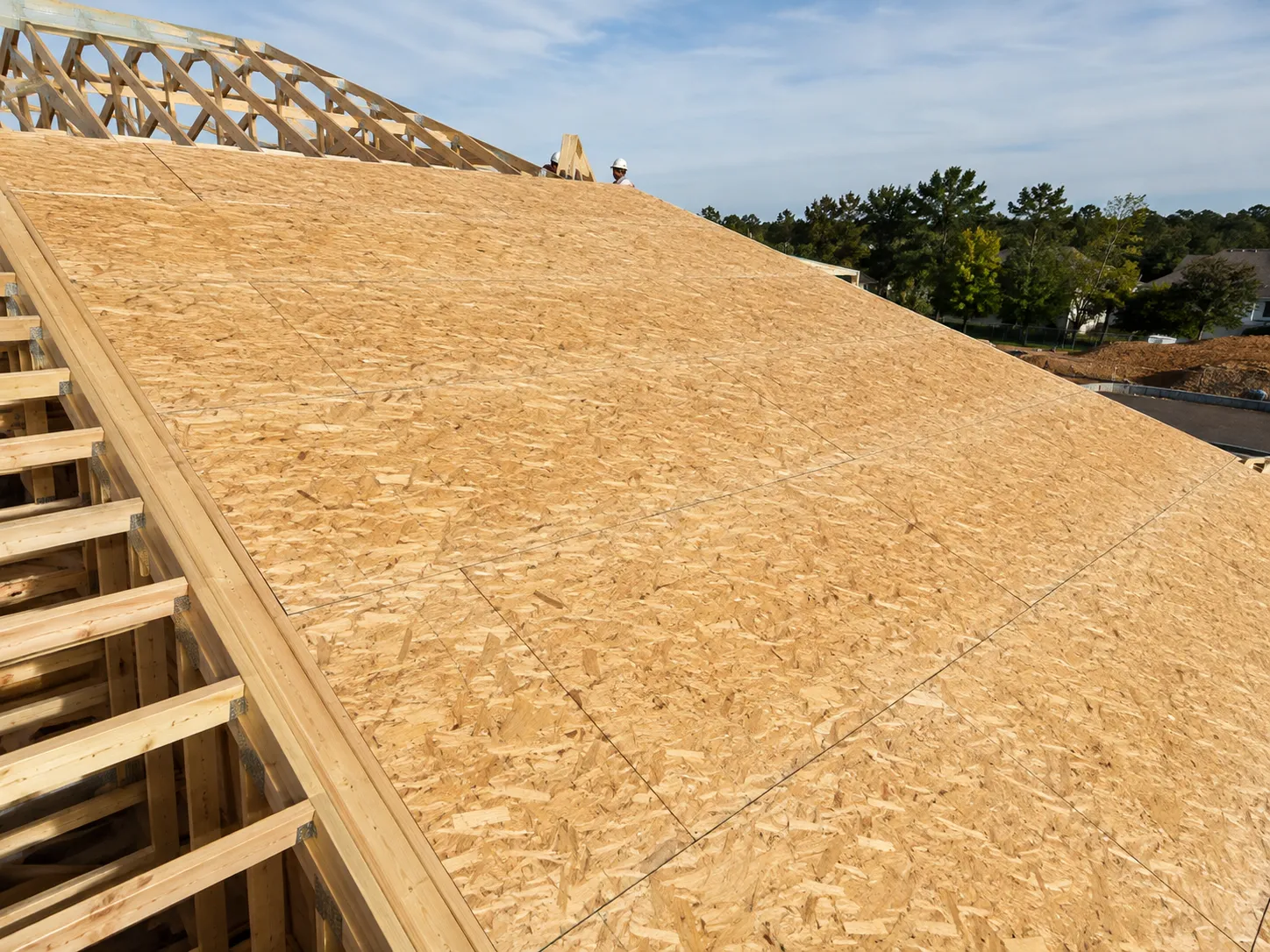
Roof Decking
Recommended: OSB/3 · 12–18 mm
OSB/3 is widely used for roof decking and sheathing where structural strength and improved resistance to humid service conditions are required.
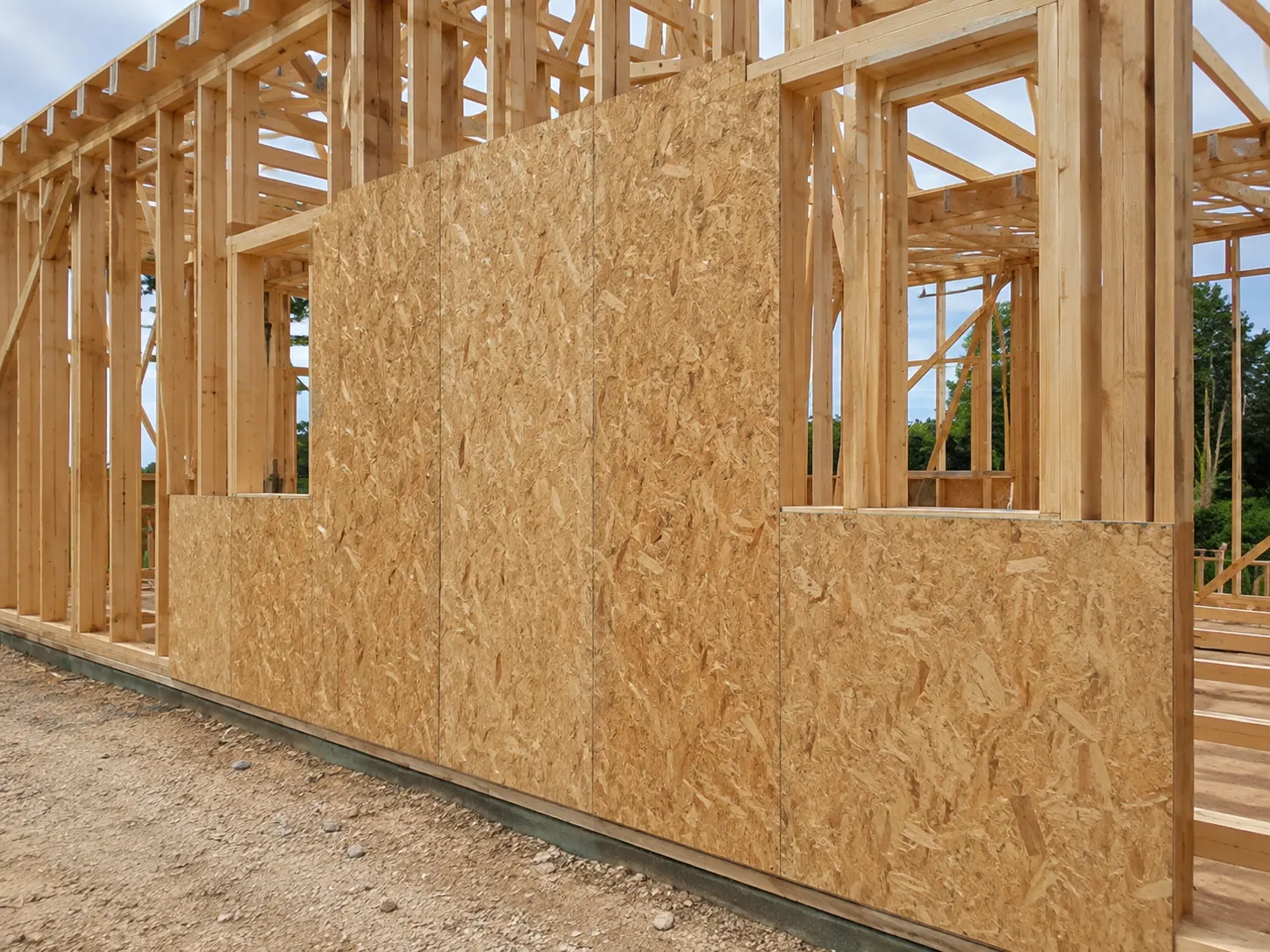
Wall Sheathing
Recommended: OSB/3 · 9–15 mm
Structural OSB provides a continuous sheathing layer for timber-frame walls, helping improve panel stiffness and structural stability.
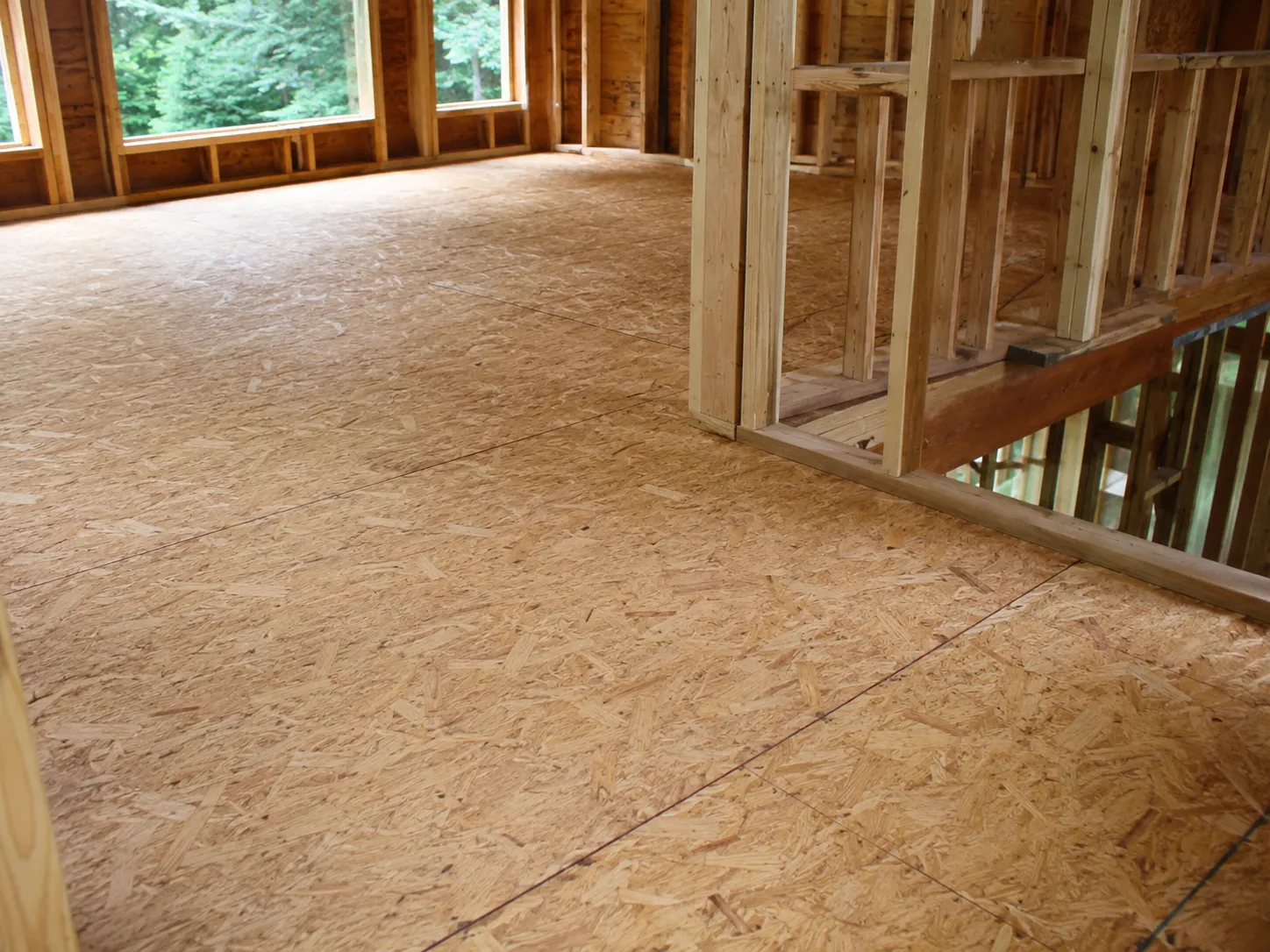
Subfloor & Flooring
Recommended: OSB/3 / OSB/4 · 15–25 mm
Thicker structural panels are commonly selected for subfloors and flooring where stiffness, load capacity and resistance to deflection are important.
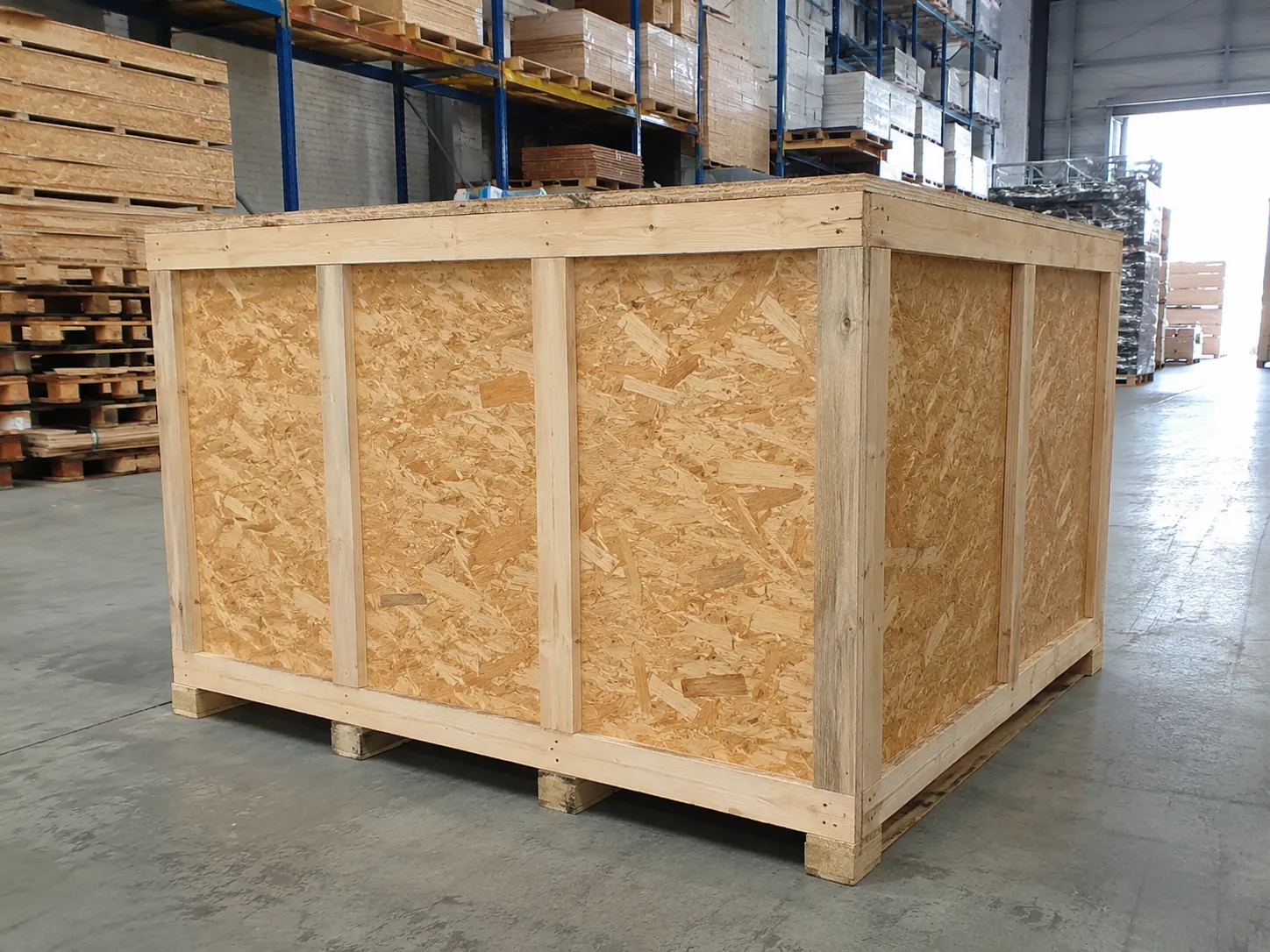
Packaging & Industrial Use
Recommended: OSB/2 / OSB/3 · 9–18 mm
OSB is also widely used for export crates, industrial packaging, pallets, temporary structures and other general-purpose panel applications.
EDGE OPTIONS
Square Edge vs Tongue & Groove OSB
OSB edge profile should be selected according to installation method, joint support and the final structural application.
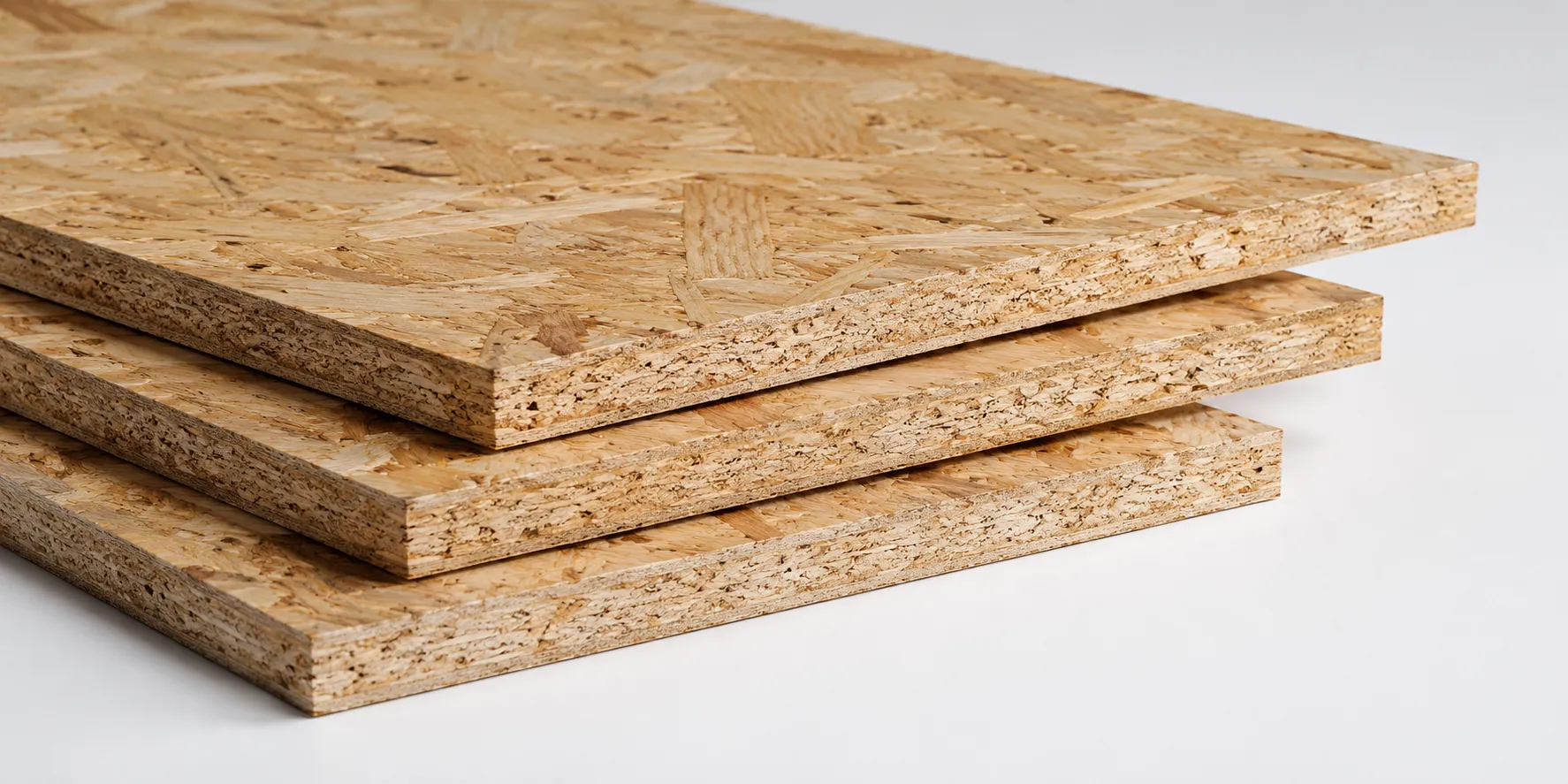
Square Edge
SE
Standard straight-edge OSB is widely used where panel joints are fully supported by framing or where simple cutting and installation are preferred.
- Wall sheathing
- General roof sheathing
- Timber-frame construction
- Packaging and industrial use
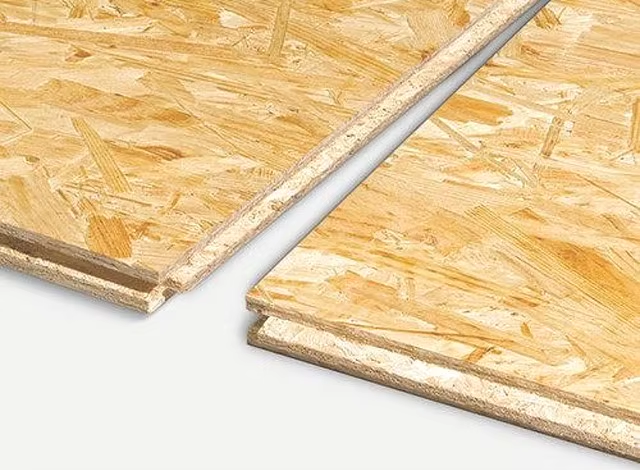
Tongue & Groove
T&G
Interlocking tongue-and-groove edges create tighter panel joints and help improve alignment and load transfer in continuous floor and roof systems.
- Structural flooring
- Subfloor systems
- Roof decking
- Continuous panel installations
Selection tip:
Square edge panels are a practical choice when all joints are supported by framing, while tongue & groove panels are especially useful for flooring and decking systems where stronger edge-to-edge connection and alignment are required.
MANUFACTURING & QUALITY
OSB Manufacturing & Quality Control
Galaxi works with established OSB manufacturing resources within Linyi and China’s wood-based panel supply network. Production is coordinated according to OSB grade, panel thickness, strand orientation, bonding system and final application requirements.
01
Strand Preparation
Selected wood is processed into long, thin strands with controlled geometry for OSB panel production.
02
Drying & Screening
Wood strands are dried and screened to control moisture, size distribution and production consistency.
03
Resin & Wax Blending
Resin and wax are applied to the strands to provide bonding strength and moisture resistance according to grade.
04
Strand Orientation & Mat Forming
Surface and core strands are oriented in different directions to create the characteristic layered OSB structure.
05
Hot Pressing & Calibration
The formed mat is hot pressed, trimmed and calibrated to reach the target thickness, density and panel stability.
06
Final Quality Inspection
Finished OSB panels are checked for thickness, dimensions, surface condition, edge quality and order specifications.
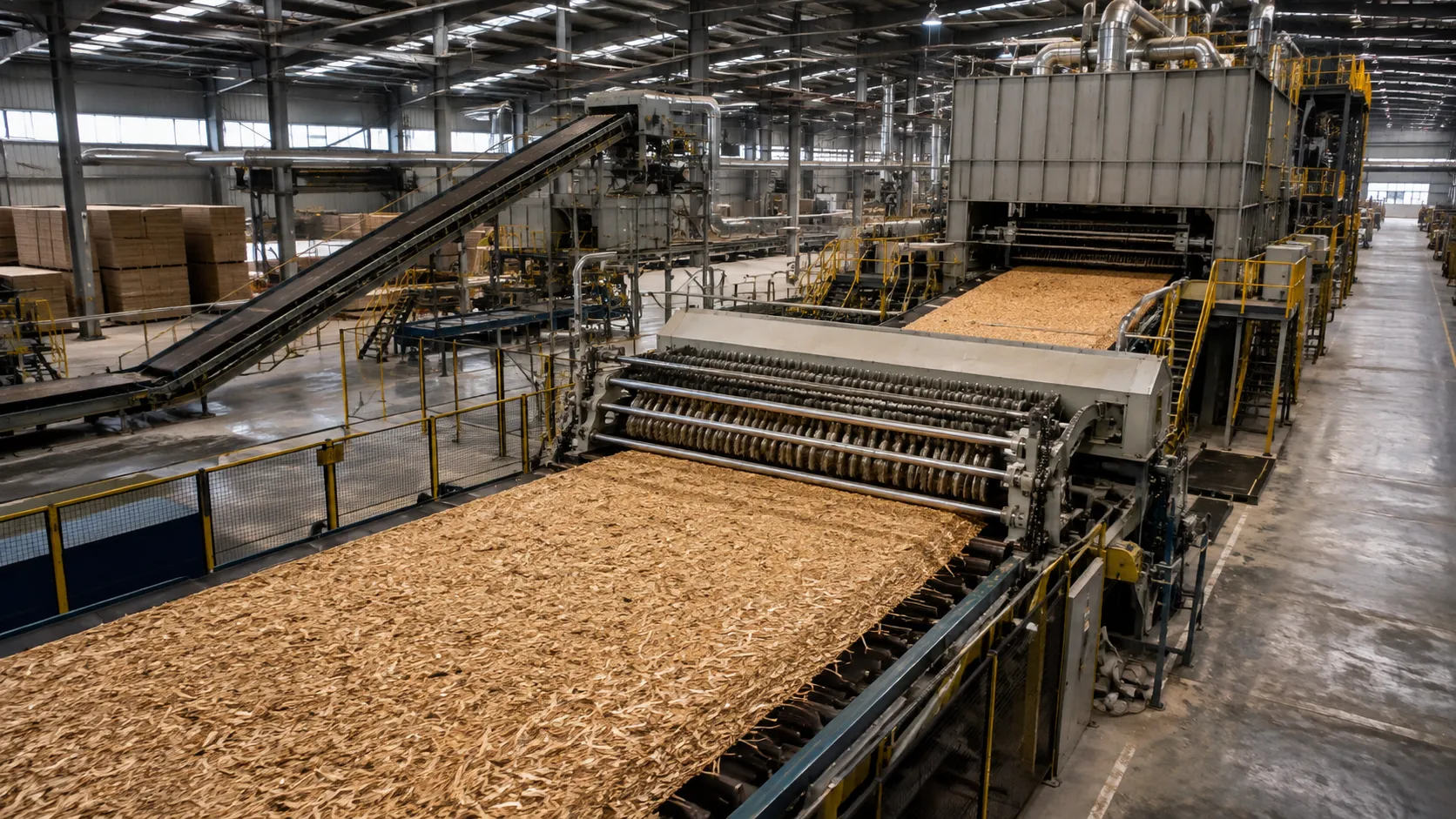
OSB strand forming, hot pressing and panel production.
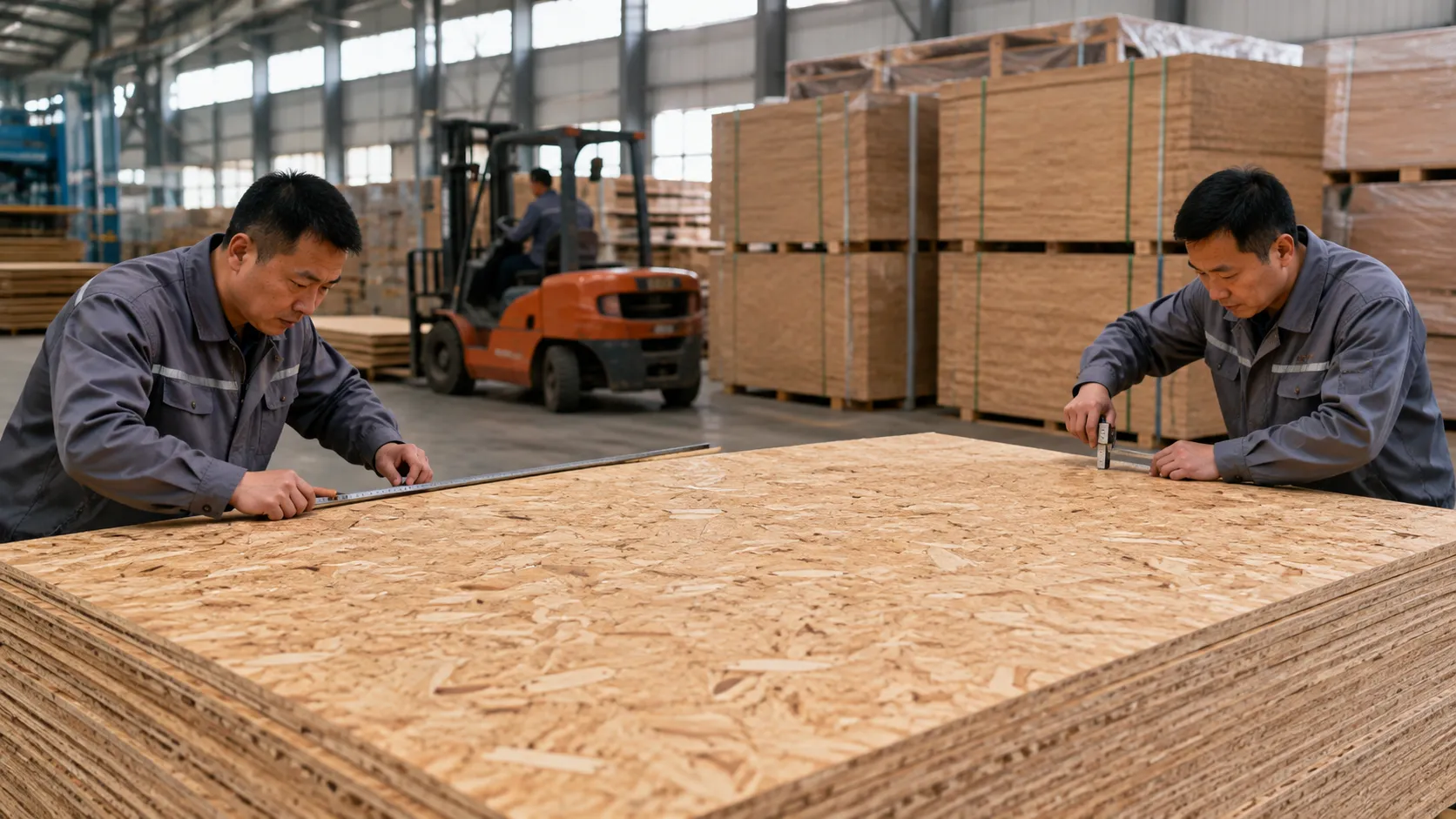
Finished OSB inspection, stacking and order preparation.