

PARTICLEBOARD
Particleboard Manufacturer & Supplier in China
Galaxi supplies particleboard for furniture, cabinetry, shelving and interior manufacturing, with configurable thickness, density, surface finish and emission grades for different production and market requirements.
Raw Particleboard · Melamine Faced Particleboard · Moisture Resistant Options
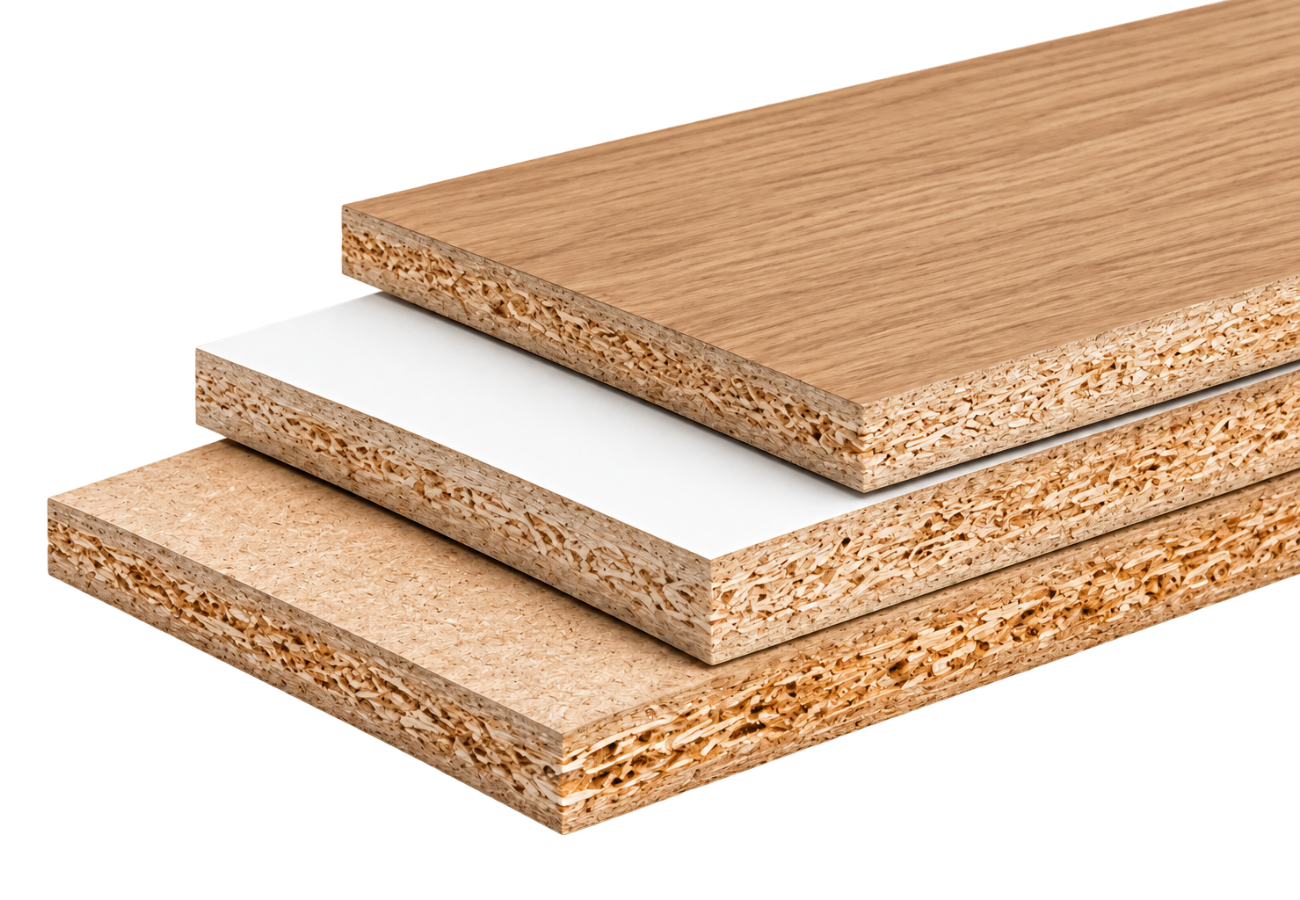
TECHNICAL OVERVIEW
Particleboard Specifications
Particleboard is available in a wide range of thicknesses, densities and surface options for furniture, cabinetry, shelving and interior manufacturing.

Panel Size
1220 × 2440 mm / 1830 × 2440 mm / 2070 × 2800 mm / customized sizes
Thickness
8–40 mm
Density
Approx. 600–750 kg/m³, depending on thickness and board specification
Board Grade
P2 / P3 and other grades according to application requirements
Surface
Raw / sanded / melamine faced / veneer / HPL laminated
Emission Grade
E1 / E0 / ENF / CARB P2 / EPA TSCA Title VI options
Moisture Content
Approx. 5–11%
Surface Finish
Fine, calibrated and sanded surface suitable for lamination and furniture processing
Processing
Cutting / drilling / edge banding / hardware installation / lamination
Applications
Furniture / cabinetry / shelving / wardrobes / office furniture / interior fit-out
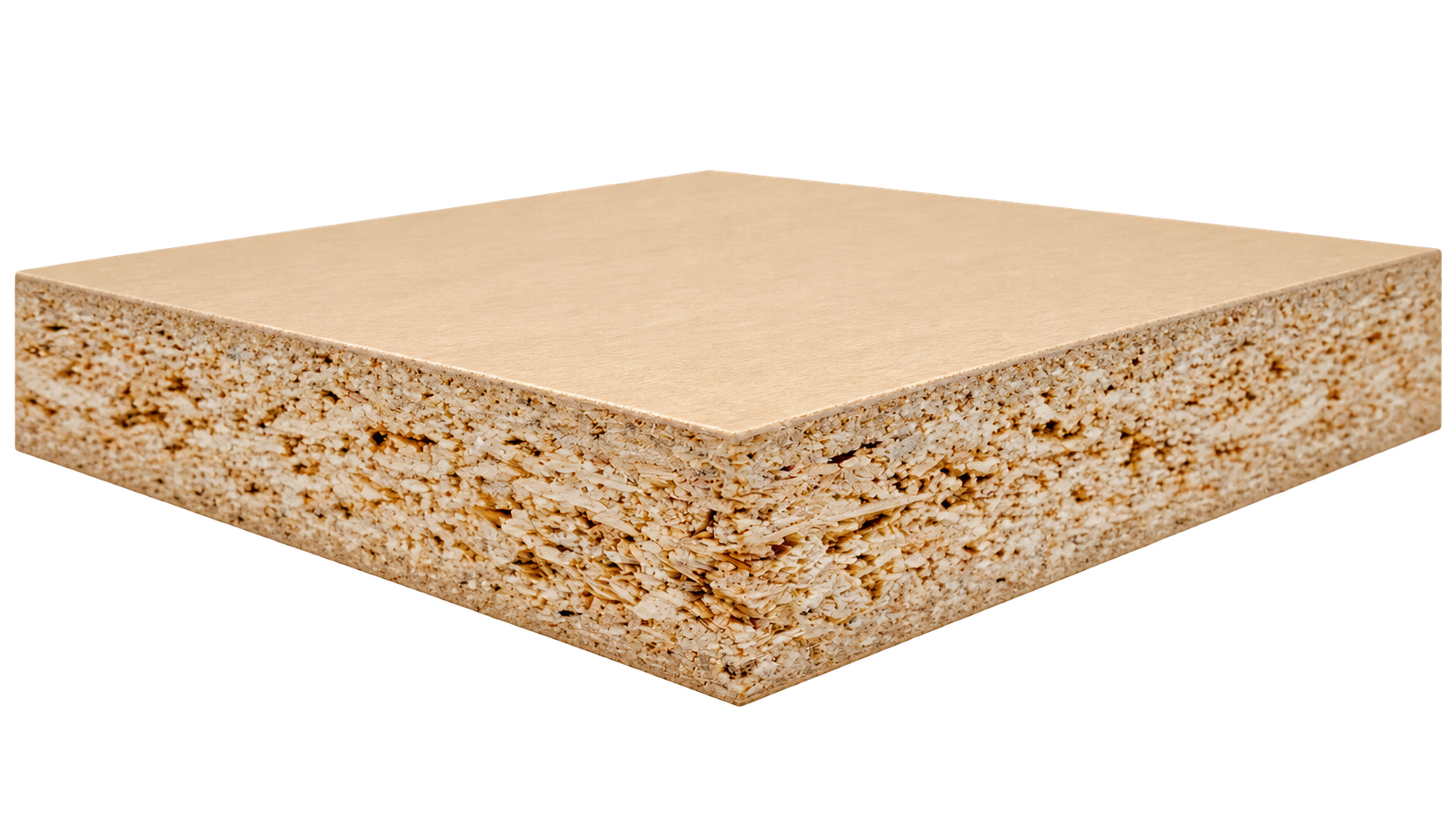
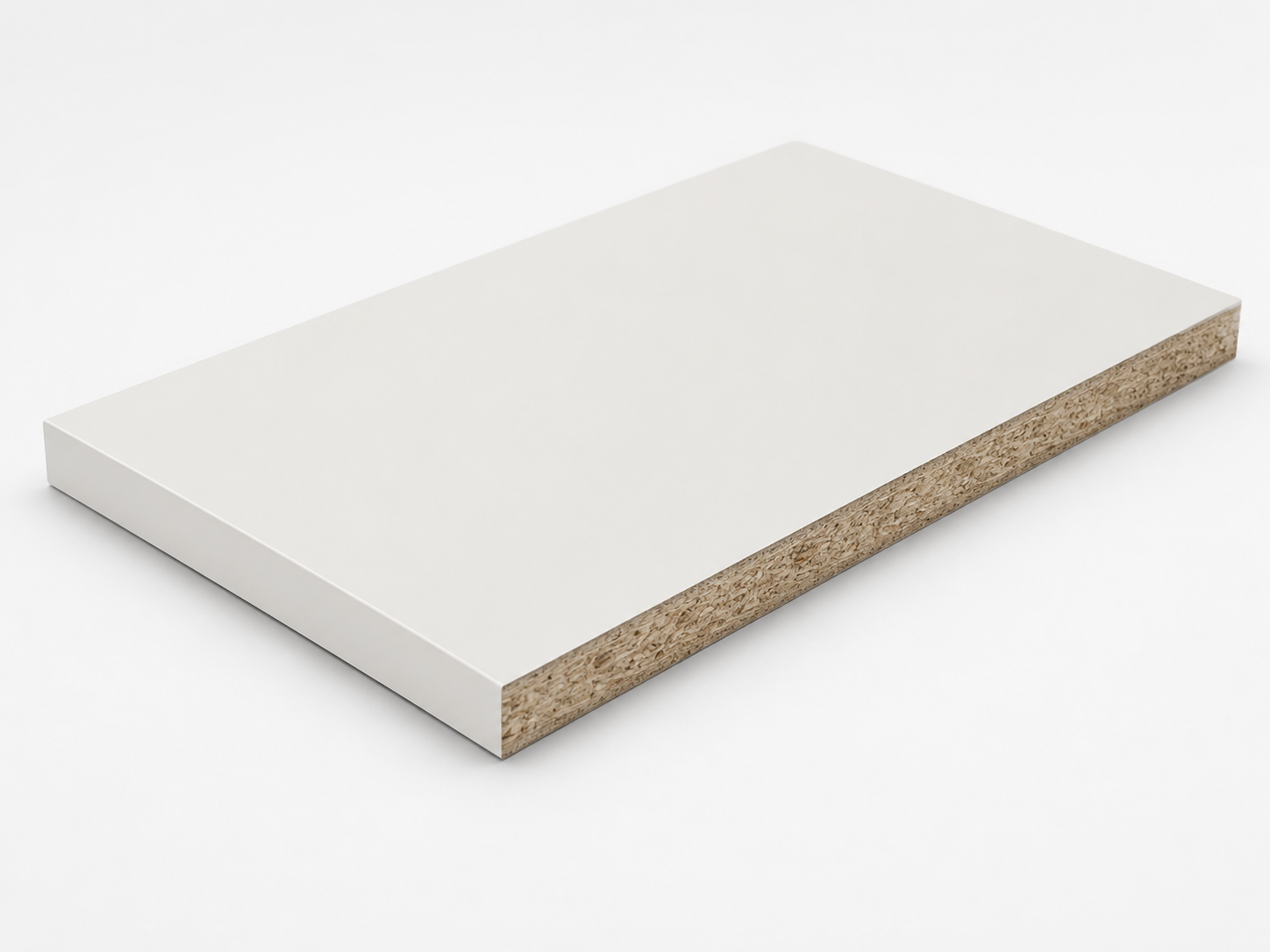
Structure & Density
01
Fine Surface Layers
Finer particles on the outer layers create a smooth surface for melamine lamination, veneer and decorative finishing.
02
Coarser Core Structure
Larger wood particles in the core provide panel thickness, internal strength and stable furniture processing performance.
03
Balanced Density Profile
Furniture-grade particleboard commonly falls around 600–750 kg/m³, depending on thickness and product specification.
PRODUCT OPTIONS
Particleboard Types
Different particleboard grades can be selected according to furniture use, interior conditions, surface requirements and final product design.
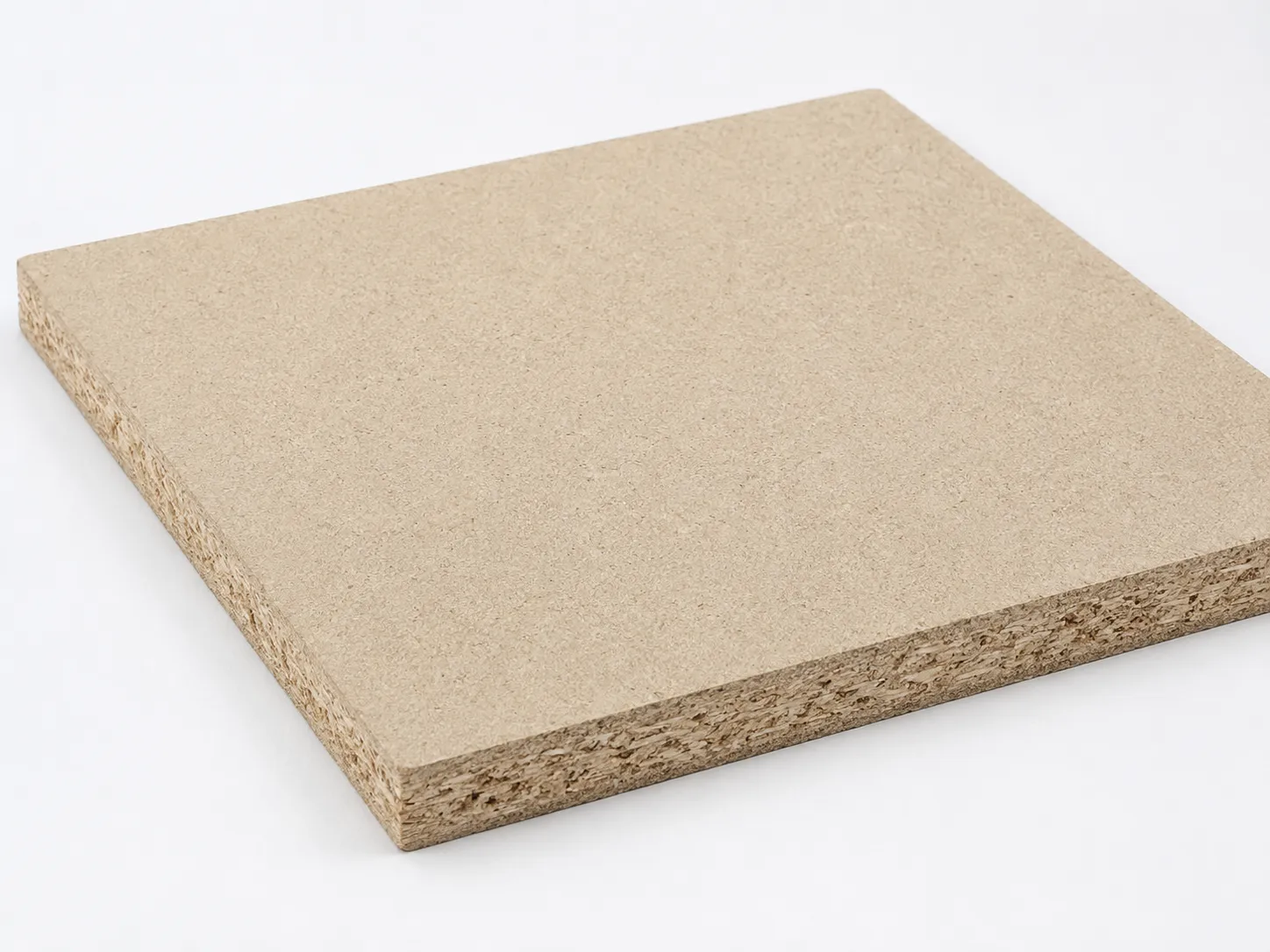
General Furniture Grade
Standard Particleboard
A cost-effective board for furniture, cabinets, shelving and general interior manufacturing, with a smooth calibrated surface for further lamination or finishing.
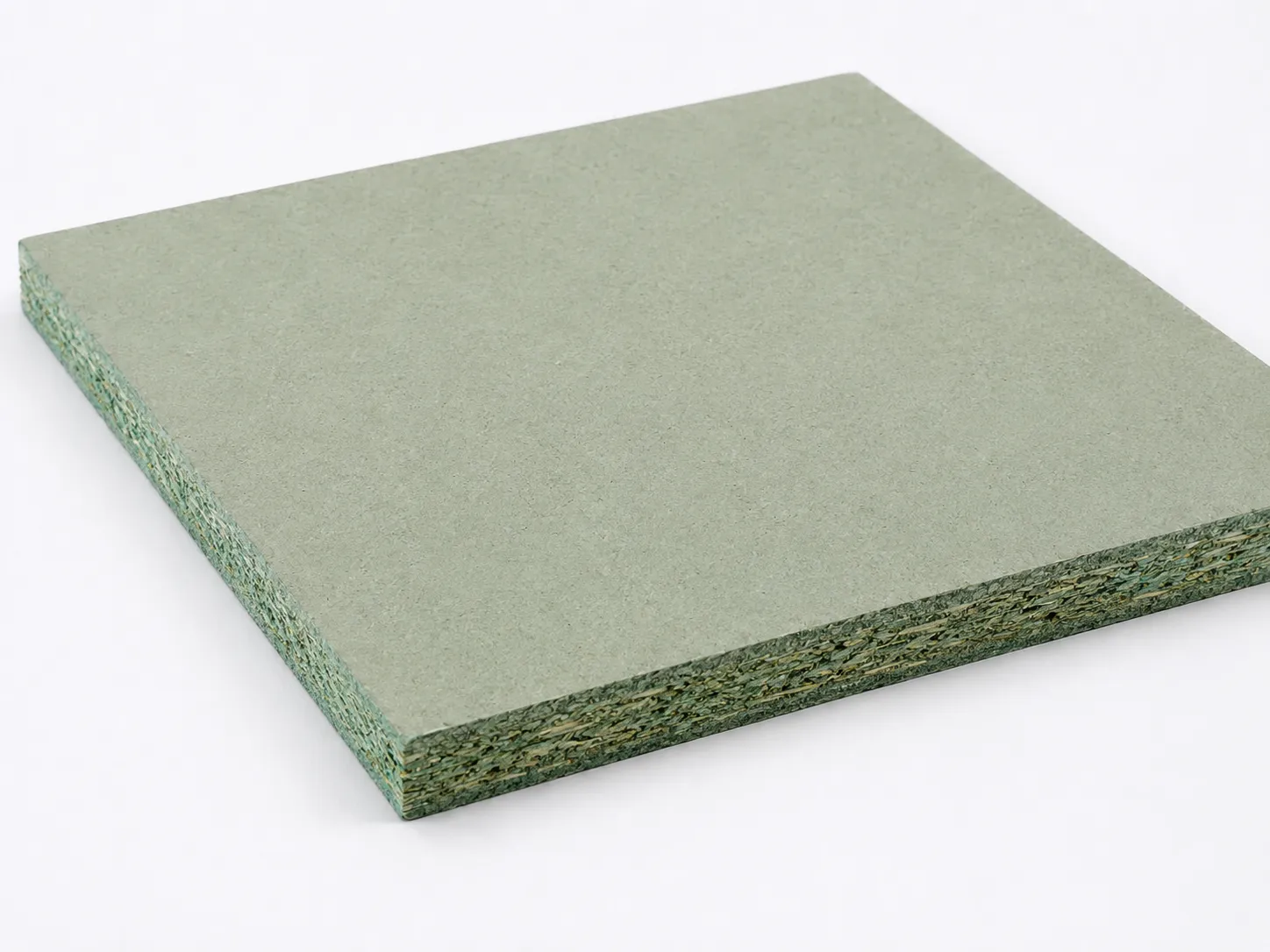
For Humid Interior Conditions
Moisture Resistant Particleboard
Designed for interior environments where improved moisture resistance is required, such as kitchens, utility furniture and other humid indoor applications.
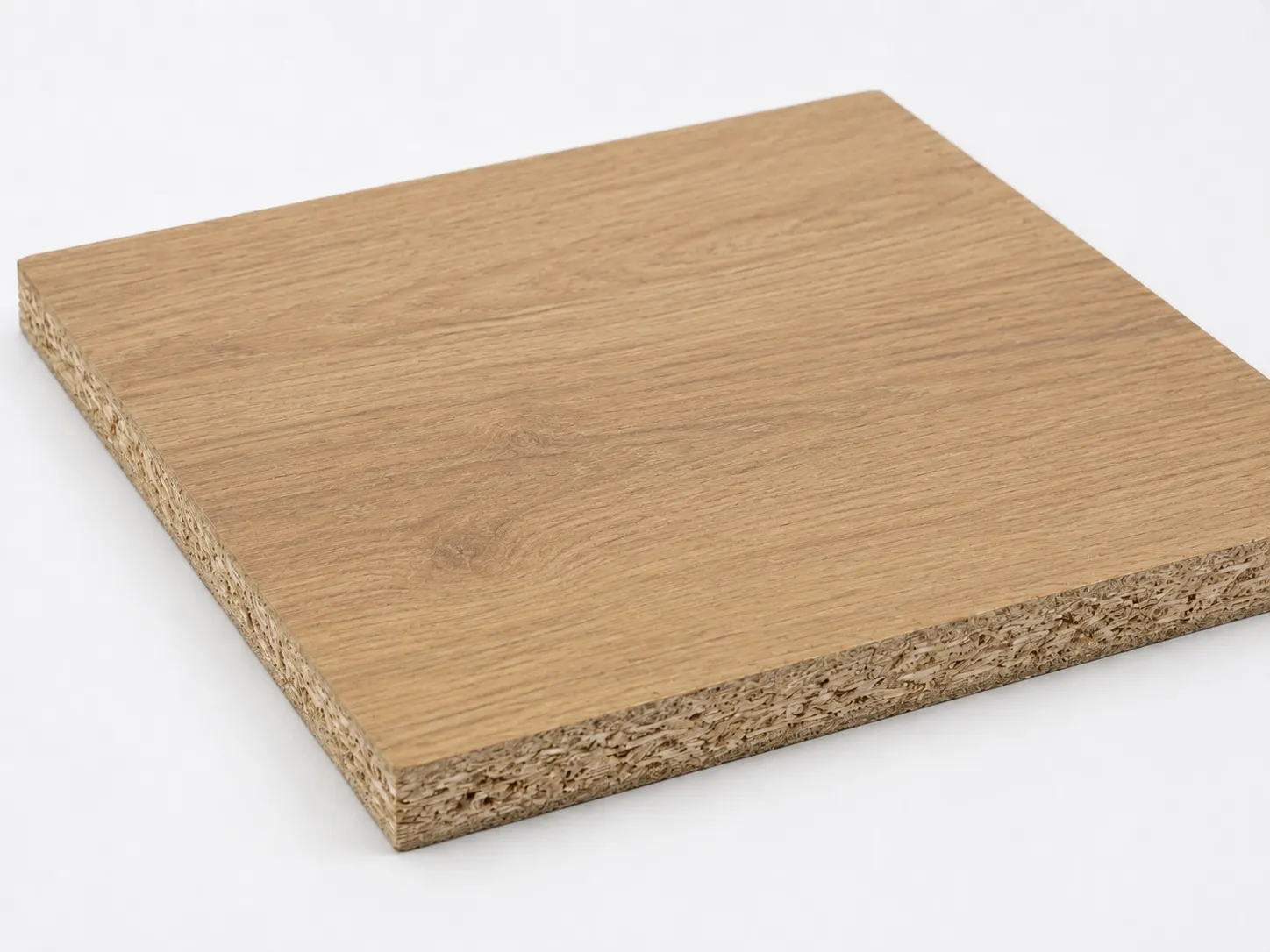
Decorative Furniture Panel
Melamine Faced Particleboard
Particleboard laminated with decorative melamine surfaces in solid colors, woodgrains and other finishes for ready-to-use furniture and interior production.
SURFACE OPTIONS
Surface & Decorative Options
Particleboard can be supplied as a raw substrate or combined with decorative surfaces for furniture, cabinetry and interior manufacturing.
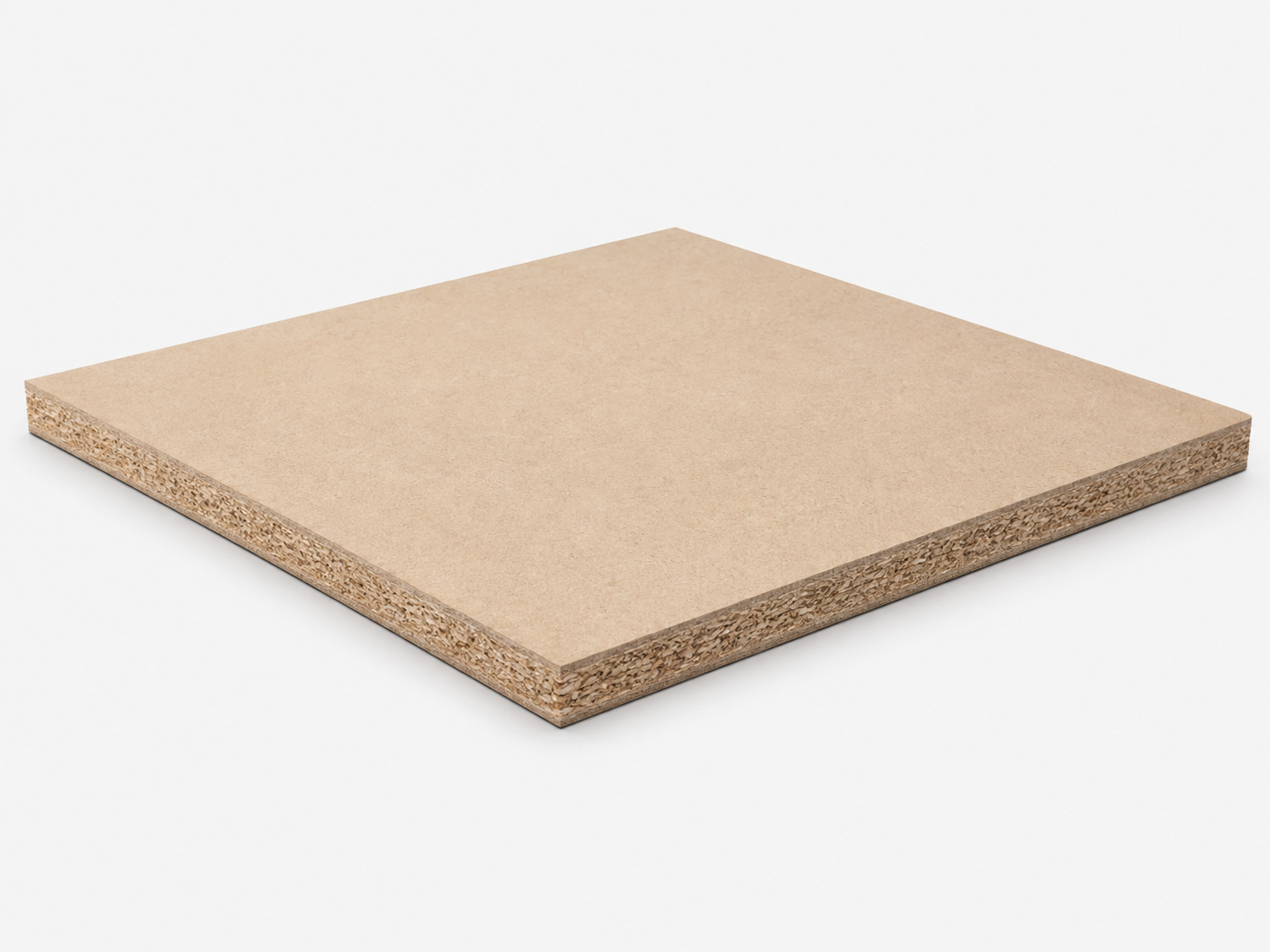
Raw Particleboard
Sanded and calibrated particleboard supplied as a base material for further lamination, veneering, coating or furniture processing.
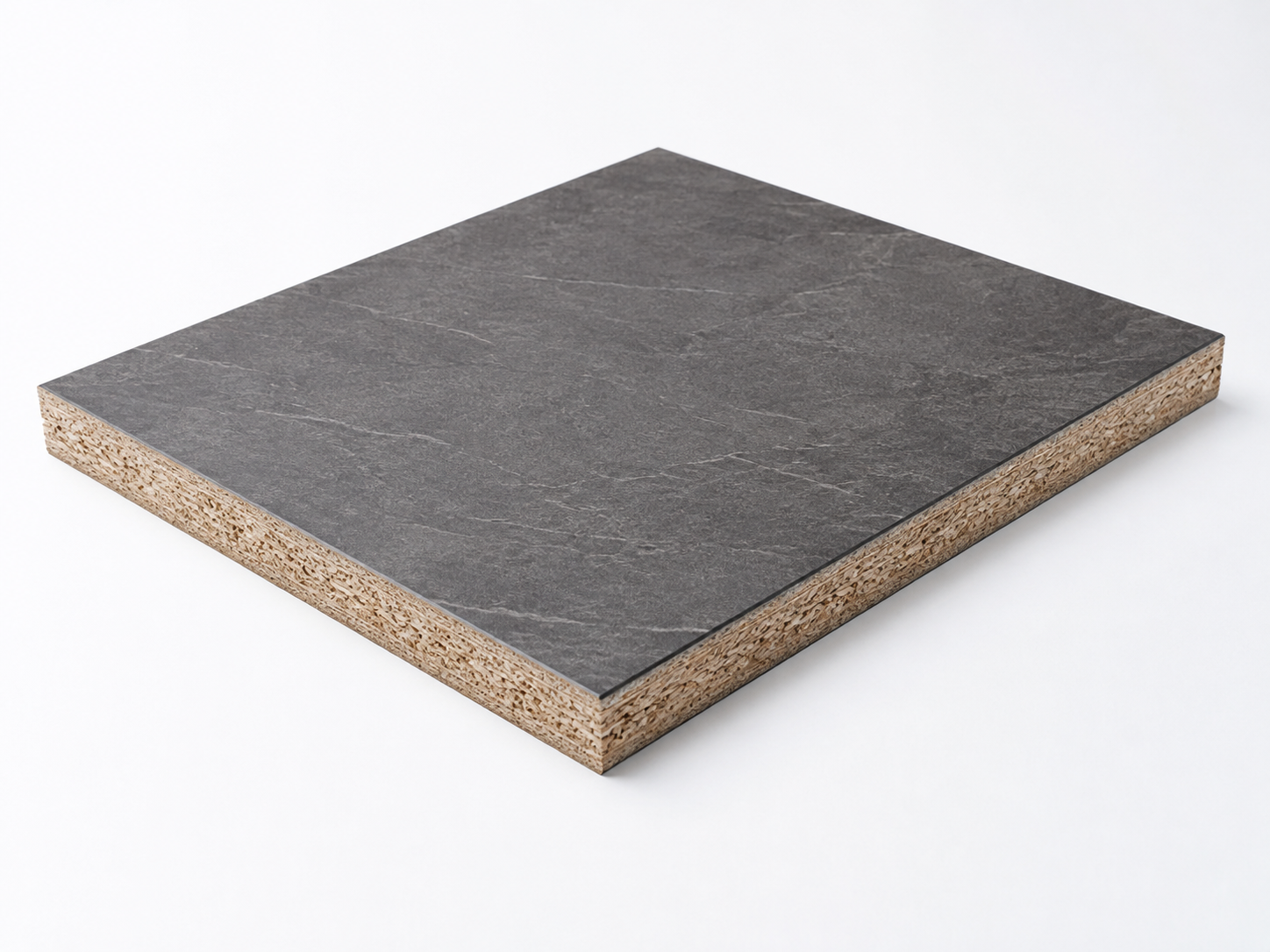
Melamine Lamination
Decorative melamine surfaces are available in solid colors, woodgrains and other finishes for ready-to-use furniture panels.
Explore Melamine Board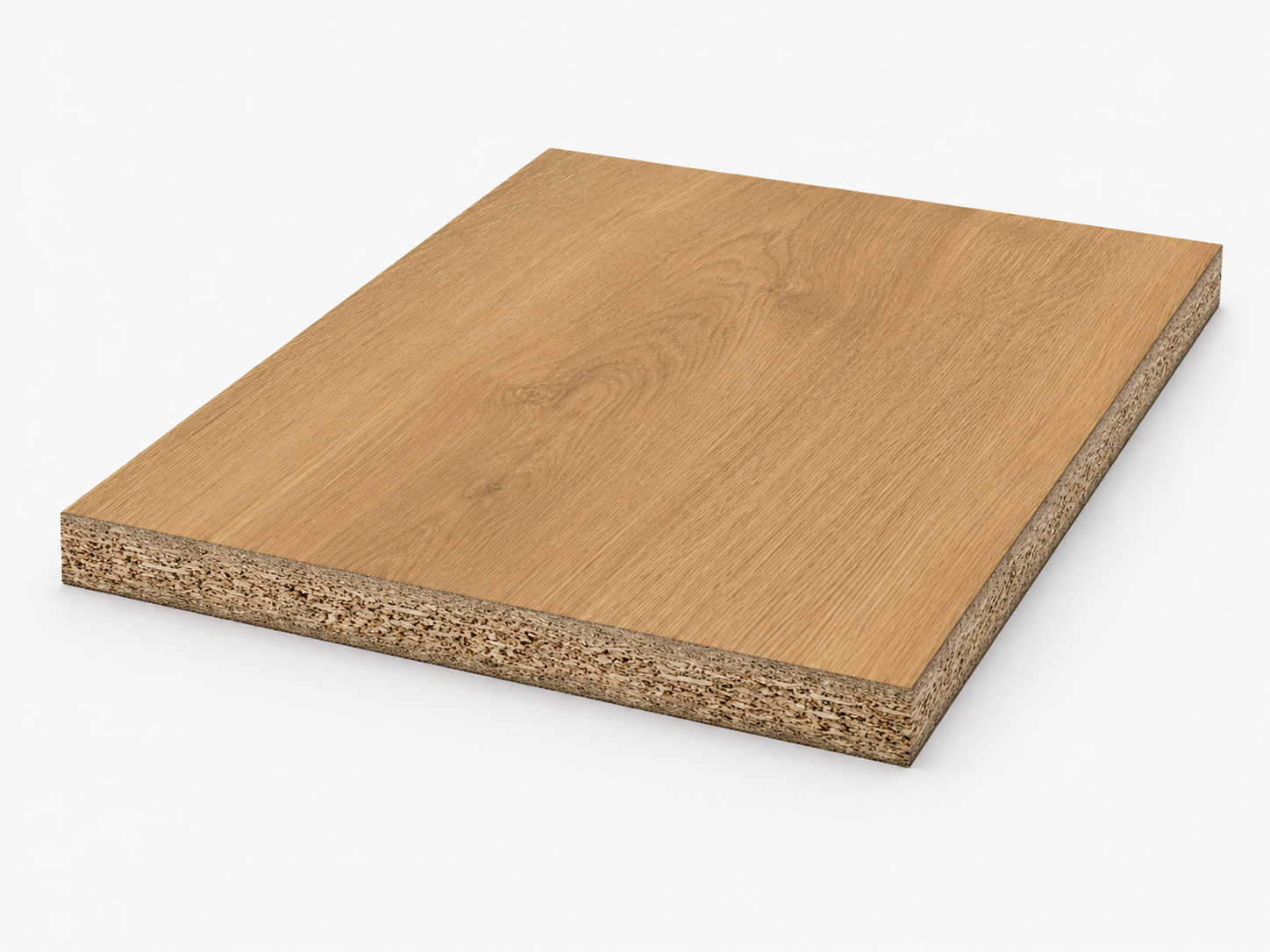
Woodgrain Decorative Finish
Wood-effect surfaces reproduce natural timber patterns while keeping the consistency and processing efficiency of particleboard.
HPL & Decorative Lamination
Particleboard can be used as a substrate for HPL and other decorative laminates where stronger surface durability is required.
FURNITURE PROCESSING
Particleboard for Furniture Processing & Assembly
Particleboard performance in furniture production depends on panel density, internal structure, surface calibration and the machining process used for the final component.
01
Cutting & Sizing
A calibrated panel structure supports consistent cutting and sizing for cabinet parts, shelves and other furniture components.
02
Drilling & Hardware Installation
Suitable for common furniture drilling operations and installation of hinges, connectors, drawer systems and other hardware.
03
Screw Holding Performance
Screw holding is influenced by board density, particle distribution, thickness and fastener position, especially near panel edges.
04
Edge Banding
Particleboard is widely used with PVC, ABS, melamine and paper edge banding for finished furniture components and cabinet production.
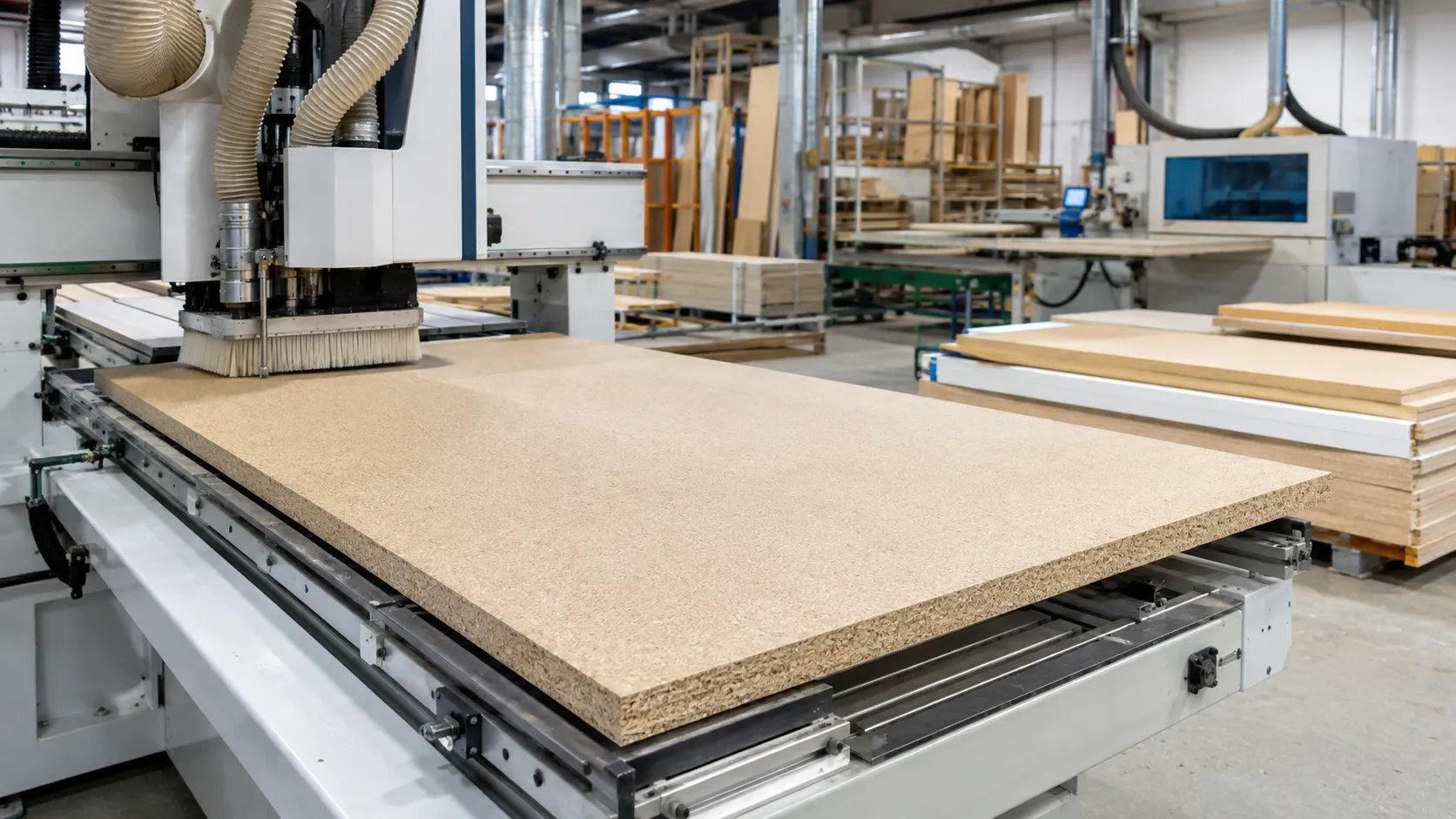
Particleboard cutting, drilling and furniture component processing.
APPLICATION GUIDE
Choose Particleboard by Application
Particleboard specifications should be matched to the final furniture structure, load requirement, interior environment and surface finish.
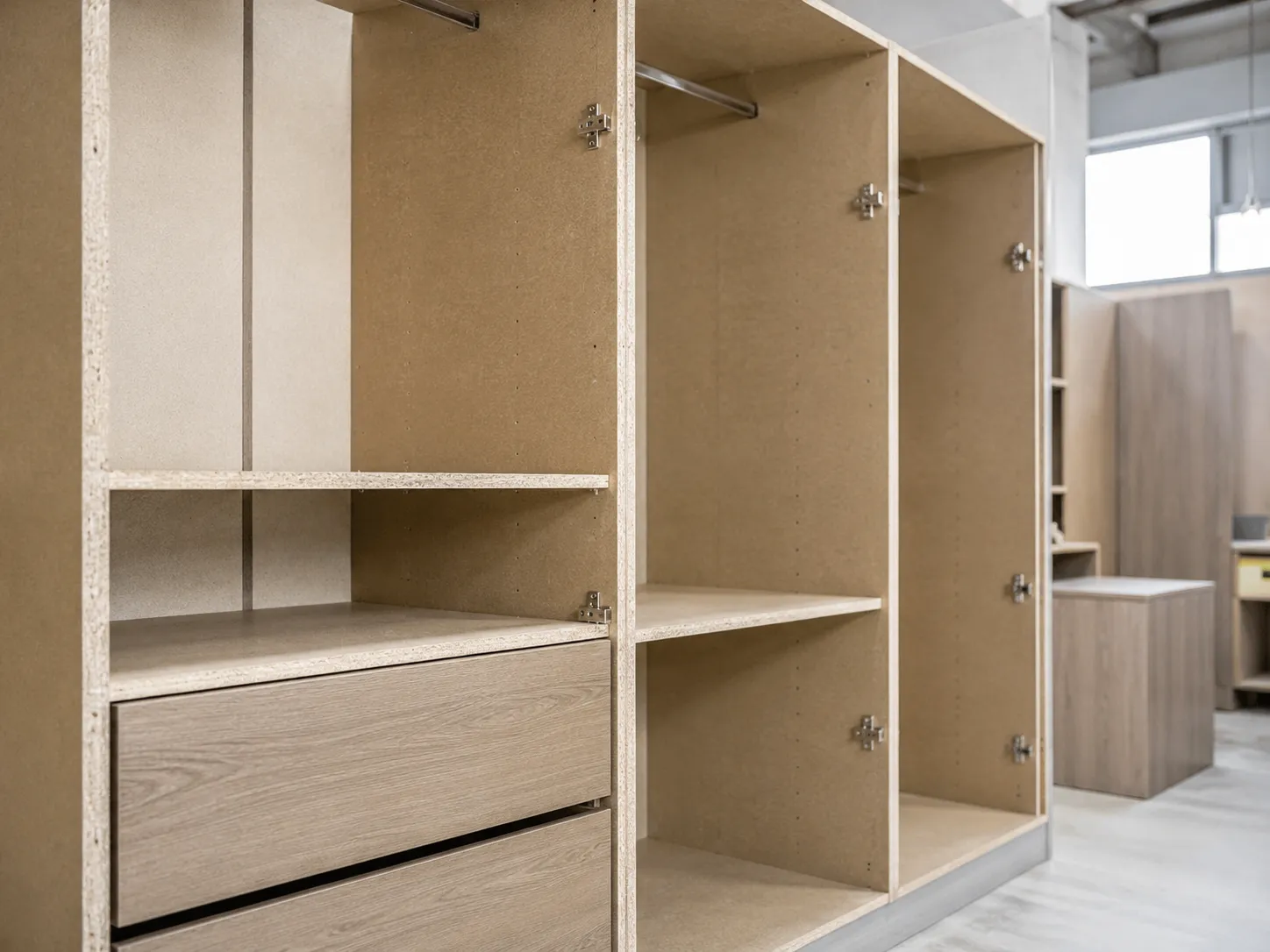
Furniture & Cabinet Carcasses
Recommended: 16–18 mm · Standard / Melamine Faced
Suitable for wardrobes, cabinet bodies, side panels, shelves and general residential furniture production.
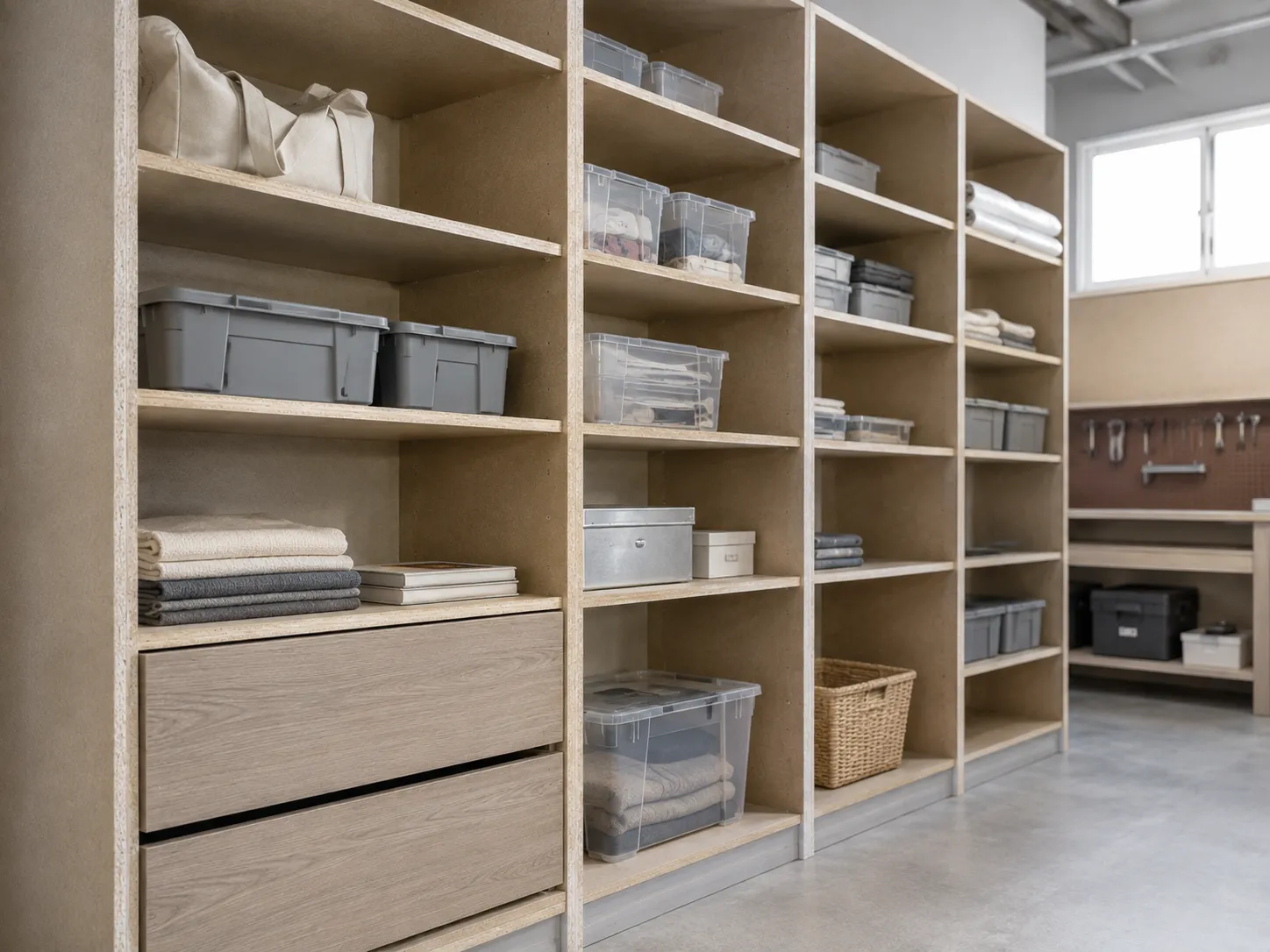
Shelving & Storage Systems
Recommended: 16–25 mm · Balanced Density
Thicker panels can be selected for longer shelves or higher load requirements where bending resistance becomes more important.
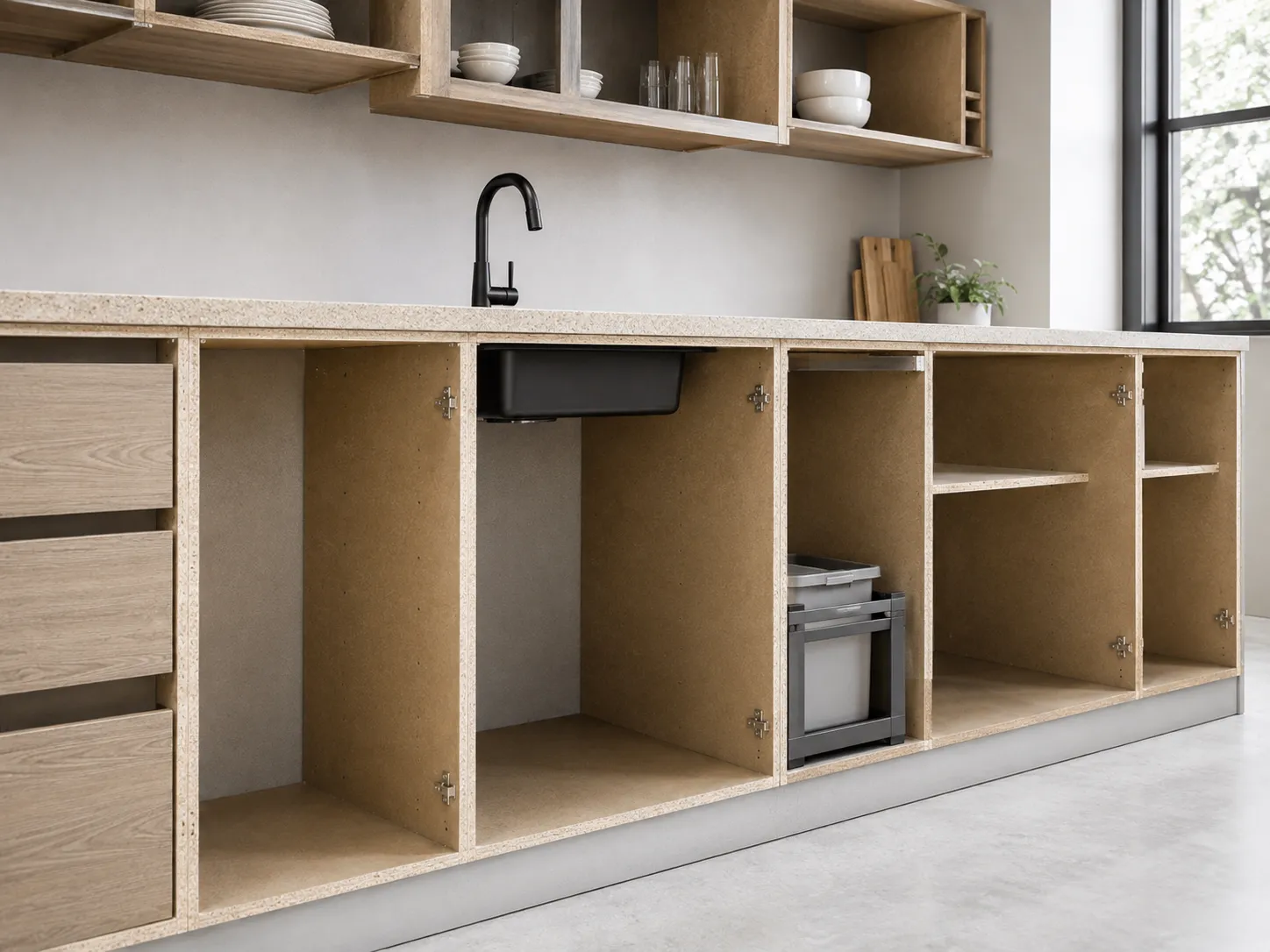
Kitchen & Utility Furniture
Recommended: 16–18 mm · MR Particleboard
Moisture resistant particleboard is commonly selected for humid interior areas such as kitchen cabinetry and utility furniture.
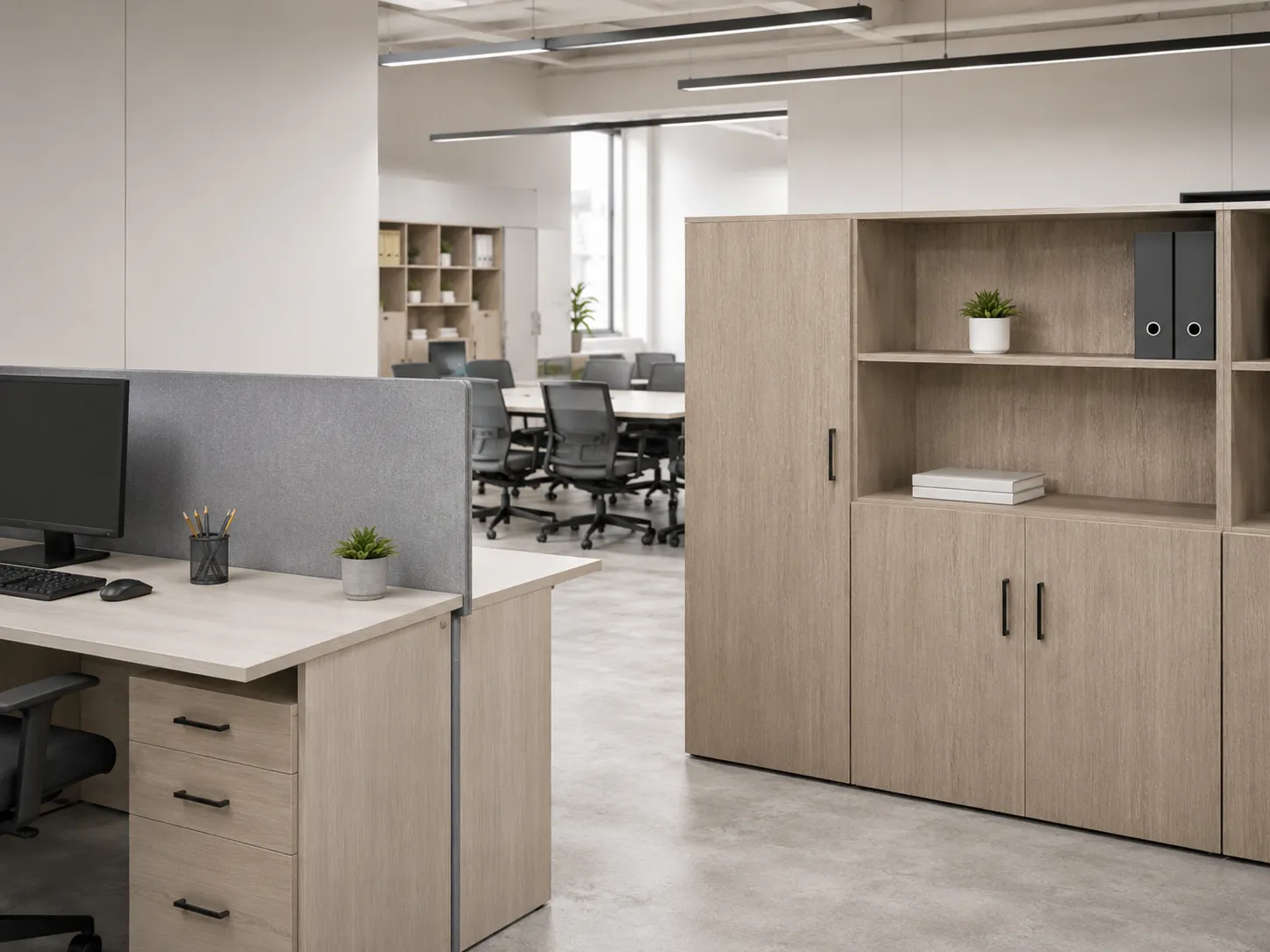
Office & Commercial Furniture
Recommended: 16–25 mm · Melamine Faced
Decorative particleboard works well for desks, storage cabinets, workstations and other commercial furniture systems.
MANUFACTURING & QUALITY
Particleboard Manufacturing & Quality Control
Galaxi works with established particleboard manufacturing resources within Linyi and China’s wood-based panel supply network. Production specifications are coordinated according to panel thickness, density, board grade, emission requirements and final furniture application.
01
Raw Material Preparation
Wood raw materials are chipped and prepared to provide controlled particle size and cleaner furnish for board production.
02
Particle Drying & Screening
Particles are dried to the required moisture level and screened into finer surface particles and coarser core particles.
03
Resin Blending & Mat Forming
Resin and additives are blended with the particles before the furnish is formed into a controlled multi-layer mat.
04
Hot Pressing & Calibration
The mat is hot pressed, trimmed, cooled and sanded to reach the target thickness, density and surface condition.
05
Final Quality Inspection
Finished boards are checked for dimensions, thickness, surface quality, moisture and order-specific performance requirements.
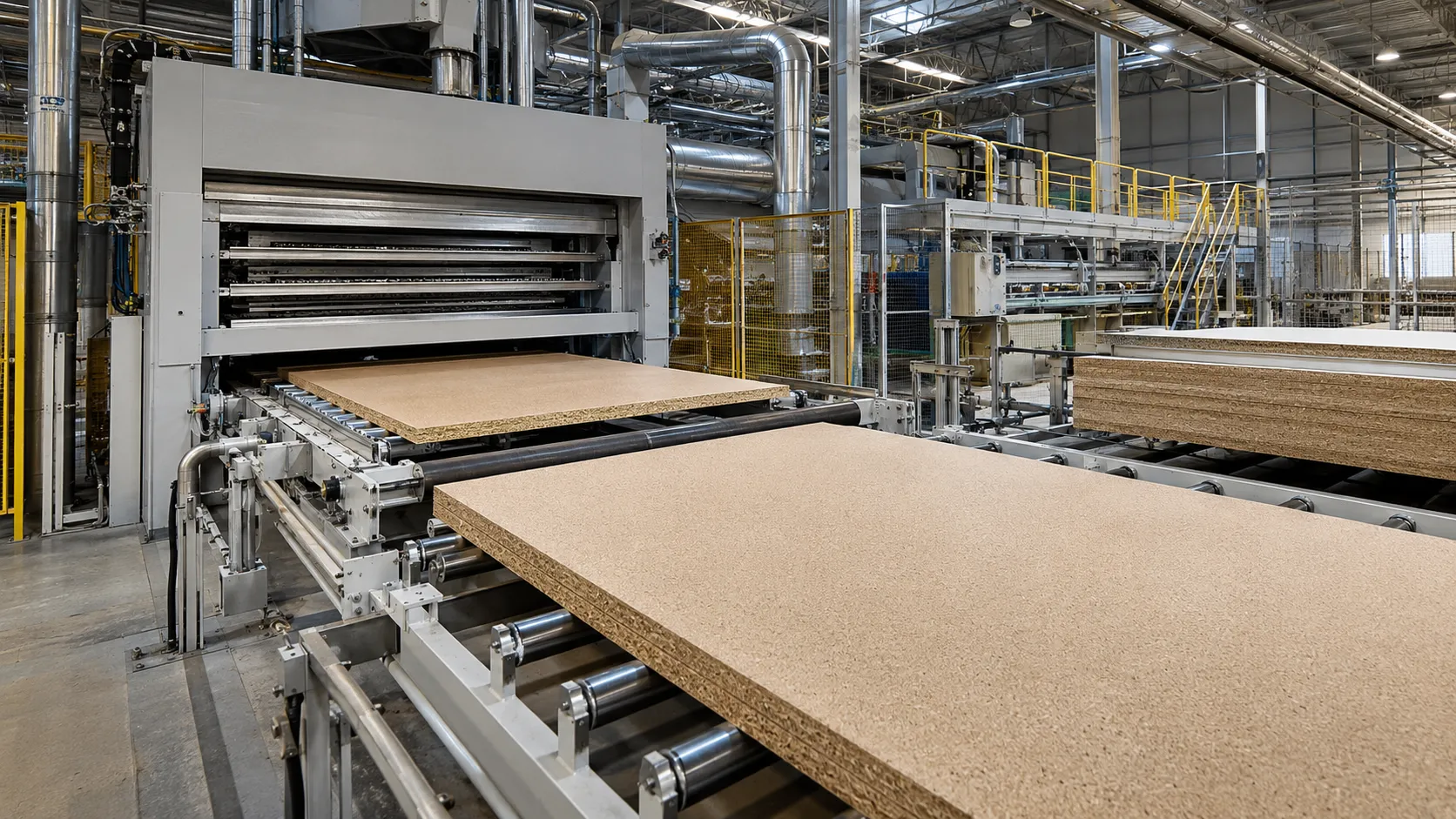
Particleboard production, pressing and panel processing.
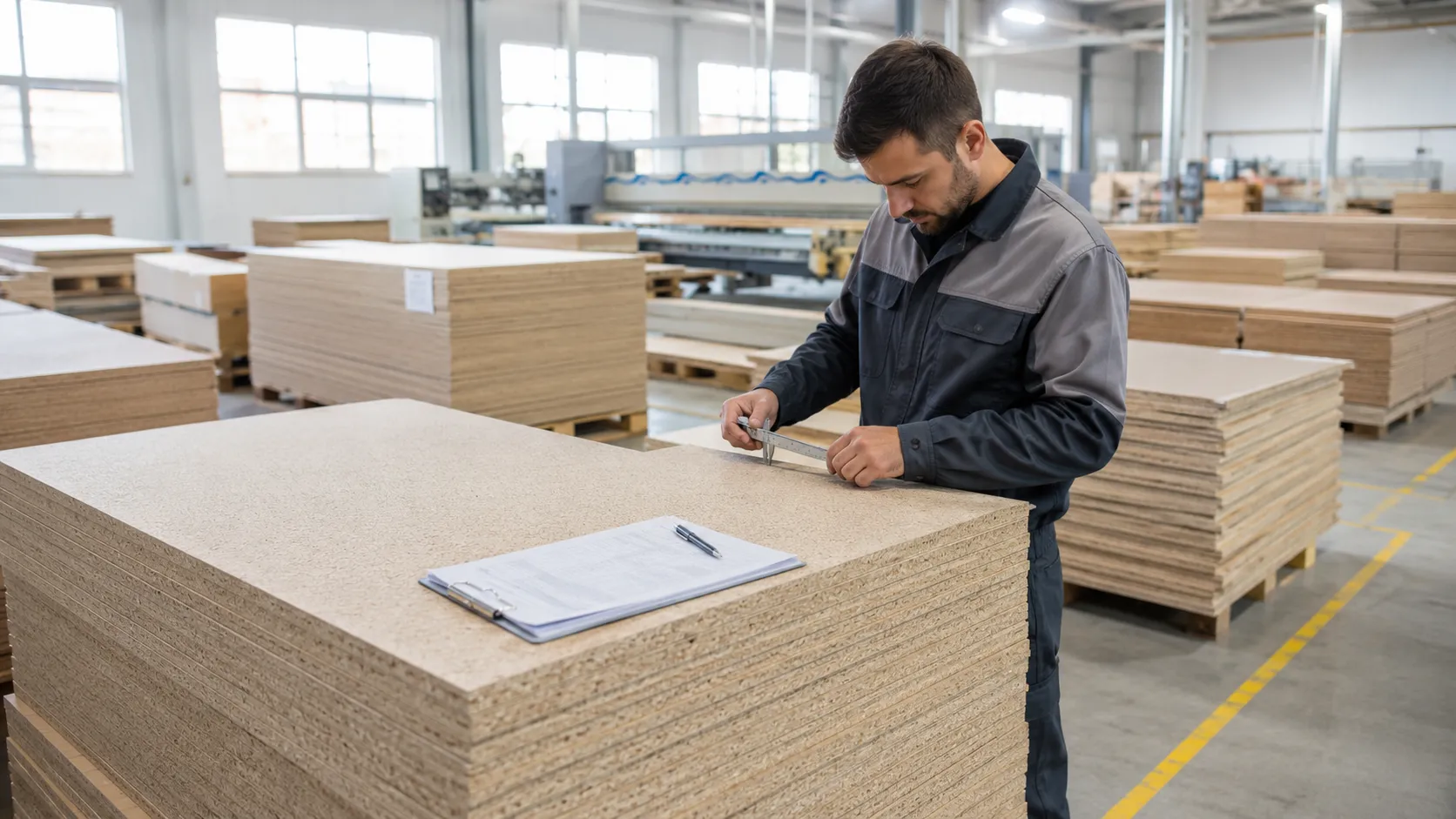
Finished panel inspection, stacking and order preparation.