
Table of contents
- Start With the Final Furniture Application
- Choose the Right Plywood Core
- Core Type Comparison for Furniture Buyers
- Surface Grade Matters More Than Many Buyers Expect
- Check Thickness Tolerance and Calibration
- Do Not Judge Furniture Plywood Only by Density
- Pay Close Attention to Internal Core Quality
- Select the Bonding System According to the Application
- Flatness Is Critical for Furniture Production
- How Furniture Manufacturers Should Match Plywood to the Application
- A Practical Plywood Buying Checklist
- Price per Sheet Is Not the Same as Furniture Production Cost
- How Galaxi Wood Approaches Furniture Plywood Supply
Choosing the right plywood for furniture manufacturing is not simply a matter of comparing thickness and price.
Two panels may both be sold as 18mm furniture plywood, yet perform very differently during cutting, drilling, edge processing, lamination and final assembly. Core construction, veneer quality, bonding, density, thickness tolerance and surface flatness can all affect production efficiency and the quality of the finished furniture.
For furniture manufacturers and plywood importers, the better approach is to select plywood according to the final application and processing method rather than relying on a single grade name.
This guide explains the main factors buyers should check before placing an order.
Start With the Final Furniture Application
The first question should not be:
Which plywood is the best?
It should be:
What will the plywood be used for?
A cabinet side panel, bed frame, sofa structure and decorative furniture component do not necessarily require the same plywood construction.
Typical furniture applications include:
- Kitchen cabinets
- Wardrobes
- Shelving
- Tables and desks
- Bed frames
- Sofa frames
- Drawer components
- Interior partitions
- Decorative furniture panels
- Upholstered furniture structures
For visible furniture components, surface quality and flatness may be more important.
For structural furniture parts, buyers may place greater importance on strength, screw holding and core integrity.
For panels that will later be laminated with melamine, veneer, HPL or decorative paper, surface smoothness and thickness consistency become especially important.
That is why a furniture plywood specification should normally begin with the final application.
Choose the Right Plywood Core
The core is one of the biggest differences between plywood products.
In international furniture production, buyers commonly encounter poplar, hardwood, combi and birch cores.
Poplar Core Plywood
Poplar plywood is relatively lightweight and is widely used in furniture and interior applications.
Its advantages may include:
- Lower panel weight
- Easy machining
- Good surface for lamination
- Competitive cost
- Suitable for many indoor furniture applications
However, buyers should pay attention to the quality of the internal veneers.
A low-price poplar panel with large core gaps or poorly joined veneers may create problems when cutting or fixing screws near the edge.
For furniture manufacturing, the internal construction is often more important than simply seeing the words “poplar core” on a quotation.
Hardwood Core Plywood
Hardwood plywood is generally selected when higher density or stronger structural performance is required.
Depending on the wood species and construction, it may offer:
- Higher density
- Better mechanical strength
- Improved screw holding
- Greater resistance to impact
It is often considered for furniture frames, cabinets and applications where the panel carries more load.
But “hardwood core” is a broad description.
Different factories may use different hardwood species and veneer combinations, so buyers should confirm the actual construction rather than judging from the product name alone.
Combi Core Plywood
Combi plywood combines different veneer species, often to balance cost, weight and performance.
For many furniture buyers, this can be a practical option when they require better structural properties than low-density poplar plywood but do not need a full birch construction.
The important point is consistency.
If the proportion and placement of the different veneers change significantly from batch to batch, panel performance may also change.
Birch Plywood
Birch plywood is commonly chosen for higher-end furniture, cabinets, exposed edges and applications requiring high structural consistency.
Typical advantages include:
- Dense and uniform core
- Good screw holding
- Strong edge appearance
- Good machining performance
- High structural stability
However, full birch plywood is normally more expensive and heavier than poplar or combi plywood.
For many furniture projects, full birch is not automatically necessary. The correct choice depends on the required performance and target cost.
Core Type Comparison for Furniture Buyers
| Core Type | Weight | Strength | Screw Holding | Typical Cost | Common Furniture Use |
|---|---|---|---|---|---|
| Poplar | Light | Medium | Medium | Lower | Cabinets, wardrobes, interior furniture |
| Hardwood | Medium–Heavy | Good | Good | Medium | Furniture frames, cabinets, structural parts |
| Combi | Medium | Medium–Good | Medium–Good | Medium | General furniture and mixed applications |
| Birch | Heavy | High | High | Higher | Premium furniture, cabinets, exposed edges |
This table should be treated as a general purchasing guide rather than an absolute rule. Actual performance still depends on veneer quality, core construction, bonding and manufacturing control.
Surface Grade Matters More Than Many Buyers Expect
Furniture plywood often requires additional processing after the panel arrives at the factory.
It may be:
- Veneered
- Melamine laminated
- HPL laminated
- Painted
- CNC machined
- UV coated
- Edge banded
Because of this, the surface should be selected according to the next production process.
A panel used under decorative veneer requires a smooth and stable face. A panel used inside upholstered furniture may not require the same visual grade.
If the plywood will be laminated, buyers should pay attention to:
- Surface smoothness
- Sanding quality
- Putty repairs
- Face veneer defects
- Thickness variation
- Local depressions
- Panel flatness
A beautiful face grade is not always necessary, but an unstable surface can create problems during lamination.
For example, irregular core overlaps or internal voids may eventually appear as surface defects after pressing decorative materials onto the plywood.
Check Thickness Tolerance and Calibration
Furniture factories often use automated cutting, CNC machining, drilling and edge banding equipment.
For these production lines, thickness consistency becomes very important.
A nominal 18mm panel does not mean that every board will measure exactly 18.0mm. The acceptable tolerance should therefore be agreed before production.
For furniture manufacturing, buyers should consider checking:
- Average panel thickness
- Maximum and minimum thickness
- Difference across the same sheet
- Sanding calibration
- Batch consistency
A small price difference can become insignificant if unstable thickness causes problems during CNC machining or edge banding.
This is particularly important when plywood must be combined with hardware, grooves, fittings or other accurately machined components.
Do Not Judge Furniture Plywood Only by Density
Density is useful, but it should not be used as the only quality indicator.
A heavier plywood panel is not automatically a better plywood panel.
Higher density may improve strength and screw holding in some constructions, but furniture manufacturers also need to consider:
- Finished furniture weight
- Handling
- Shipping cost
- Machining
- Hardware requirements
- Final application
For example, lightweight poplar plywood may be preferable for certain wardrobes or mobile furniture because reducing finished product weight is valuable.
For a structural furniture frame, a denser hardwood or birch construction may be more appropriate.
A buyer should therefore evaluate density together with core structure and final use.
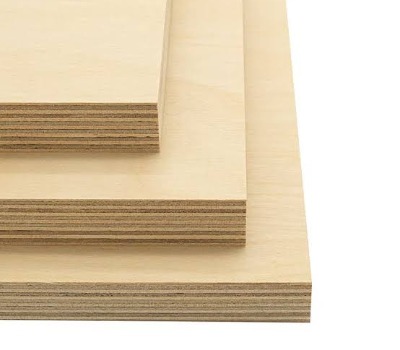
Pay Close Attention to Internal Core Quality
This is one of the most important points when buying plywood for furniture manufacturing.
The external surface can look excellent while the internal core still contains defects.
Common internal issues include:
- Core gaps
- Overlapping veneers
- Open joints
- Uneven veneer thickness
- Weak veneers
- Local voids
- Poorly repaired defects
These problems may only become visible after the furniture factory starts cutting the panels.
They can affect:
- Screw holding
- Edge quality
- CNC routing
- Cutting accuracy
- Furniture strength
- Edge banding appearance
For this reason, buyers should not evaluate furniture plywood only from photographs of complete panels.
When developing a new supplier, it is useful to inspect cut edges and cross-sections as well.
For larger or repeat orders, random cutting inspection can reveal much more about actual core quality than surface appearance alone.
Select the Bonding System According to the Application
Furniture plywood is commonly used indoors, but different furniture projects still require different moisture resistance.
A bedroom cabinet in a dry environment does not have the same requirement as a kitchen cabinet or furniture used in a humid climate.
Buyers should therefore clarify:
- Indoor or humid environment
- Required bonding performance
- Formaldehyde emission requirement
- Destination market
- Customer-specific testing requirements
For export furniture, emission compliance can be especially important.
Depending on the destination and application, buyers may need to discuss requirements such as E1 or market-specific formaldehyde standards with the supplier before production.
The important point is not to simply request “waterproof glue” or “environmental glue.”
The required standard should be clearly defined in the purchase specification.
Flatness Is Critical for Furniture Production
Panel flatness is sometimes overlooked during price negotiations, but it can create major problems on a furniture production line.
Warped plywood may affect:
- Cutting
- CNC feeding
- Lamination
- Assembly
- Cabinet alignment
- Finished furniture appearance
Flatness depends on several factors, including veneer moisture, pressing conditions, panel construction and storage.
Packaging and transportation also matter.
A good panel can still develop problems if it is stored improperly or exposed to uneven moisture after production.
For container orders, buyers should therefore check both production quality and packing method.
How Furniture Manufacturers Should Match Plywood to the Application
There is no single plywood construction that is best for every furniture product.
A practical buying approach looks more like this:
Cabinets and Wardrobes
Important factors:
- Flatness
- Surface smoothness
- Thickness consistency
- Screw holding
- Lamination performance
Poplar, hardwood, combi and birch plywood may all be suitable depending on the quality level and price target.
Sofa and Upholstered Furniture Frames
Important factors:
- Structural strength
- Screw and staple holding
- Core integrity
- Cost efficiency
Surface appearance is usually less important than internal construction.
Premium Furniture and Exposed Edges
Important factors:
- Uniform core
- Clean edge appearance
- Machining performance
- Structural stability
Birch plywood or higher-grade dense core constructions are often considered for these applications.
Decorative Laminated Panels
Important factors:
- Surface calibration
- Flatness
- Smoothness
- Stable thickness
- Low risk of telegraphing internal defects
The quality of the substrate directly affects the appearance of the final laminated product.
A Practical Plywood Buying Checklist
Before confirming a furniture plywood order, buyers should clearly define at least the following:
| Item | What to Confirm |
|---|---|
| Application | Cabinet, wardrobe, sofa, table, structural furniture, etc. |
| Size | Length × width |
| Thickness | Nominal thickness and tolerance |
| Core | Poplar, hardwood, combi, birch or customized |
| Face / Back | Required veneer and grade |
| Surface | Sanded, raw, melamine, veneer, HPL-ready, etc. |
| Bonding | According to application and moisture requirement |
| Emission | Required destination-market standard |
| Density | Target range if important |
| Moisture | Agreed requirement |
| Flatness | Production requirement |
| Core Quality | Limits for gaps and overlaps |
| Packing | Pallet, protection and export marking |
| Inspection | Pre-shipment or batch inspection requirements |
For regular container purchases, these points should ideally become part of a fixed technical specification rather than being discussed again for every shipment.
That helps both the buyer and supplier maintain consistent quality.
Price per Sheet Is Not the Same as Furniture Production Cost
This is where experienced buyers often look beyond the FOB price.
Suppose Supplier A offers plywood several dollars cheaper per cubic meter than Supplier B. That initially looks attractive.
But if the cheaper plywood produces more:
- Edge breakage
- Core voids
- Warped panels
- CNC rejects
- Lamination defects
- Thickness problems
the actual furniture production cost may be higher.
For industrial buyers, the more useful question is:
How much usable furniture output can I obtain from each container of plywood?
Not simply:
Which supplier has the lowest price per sheet?
Stable plywood can reduce waste, production interruptions and quality claims.
For repeat furniture production, consistency between shipments is often more valuable than achieving the lowest possible price on one order.
How Galaxi Wood Approaches Furniture Plywood Supply
Galaxi Wood works with established plywood production resources in Linyi, China, supplying different plywood constructions for furniture, cabinetry and industrial applications.
Depending on the project, specifications can be developed around:
- Poplar, hardwood, combi or birch core
- Different face and back veneers
- Customized thickness and panel sizes
- Surface requirements
- Bonding requirements
- Density targets
- Packing and container loading requirements
For buyers developing a new plywood for furniture manufacturing specification, the most useful starting point is usually the finished furniture application.
From there, the panel construction can be matched to the required performance and target cost.
Explore our plywood products and supply options, or send us your current specification for evaluation.